Ultimate Guide to Baby Nursery Organization: Tips for a Tidy and Functional Space
This post may contain affiliate links. As an Amazon Associate, I earn from qualifying purchases at no extra cost to you.

Bringing your baby into the world is one of life’s most beautiful and unforgettable moments. From the moment you meet your little one, you are filled with an overwhelming sense of love.
But those first few weeks? They can feel overwhelming fast.
Between feedings, diaper changes, soothing cries, and middle-of-the-night wakeups, you’re running on little sleep and pure instinct. The last thing you need is digging through drawers looking for diaper cream at 2 a.m.
An organized nursery made a huge difference for me when my son Bryson was born. Instead of feeling scattered, I felt prepared. Everything had a place. And when you’re in survival mode with a newborn, that kind of calm is priceless.
In this post, I’ll show you:
- How to group nursery baby items
- Smart nursery organization systems that actually work
- How to save space (without overbuying bins)
- And the exact products I personally recommend
How to Group Nursery Baby Items
Babies come with so much dang stuff! Swaddles. Blankets. Tiny socks. Diapers in three different sizes. Bottles. Creams. It adds up fast.
The first step to an organized nursery is simple:
Take inventory and group similar items together.
Lay everything out and create piles by category. Add a sticky note on top of each pile so you can clearly see your categories.
Another strategy is to write out your list of nursery items on paper and group them on paper. Below is an example of how to group nursery baby items.
Some common nursery groupings:
- Accessories
- Clothing
- Sleepwear
- Diapering
- Linens
- Health & wellness items
- Playing
- Self-care items
- Keepsakes
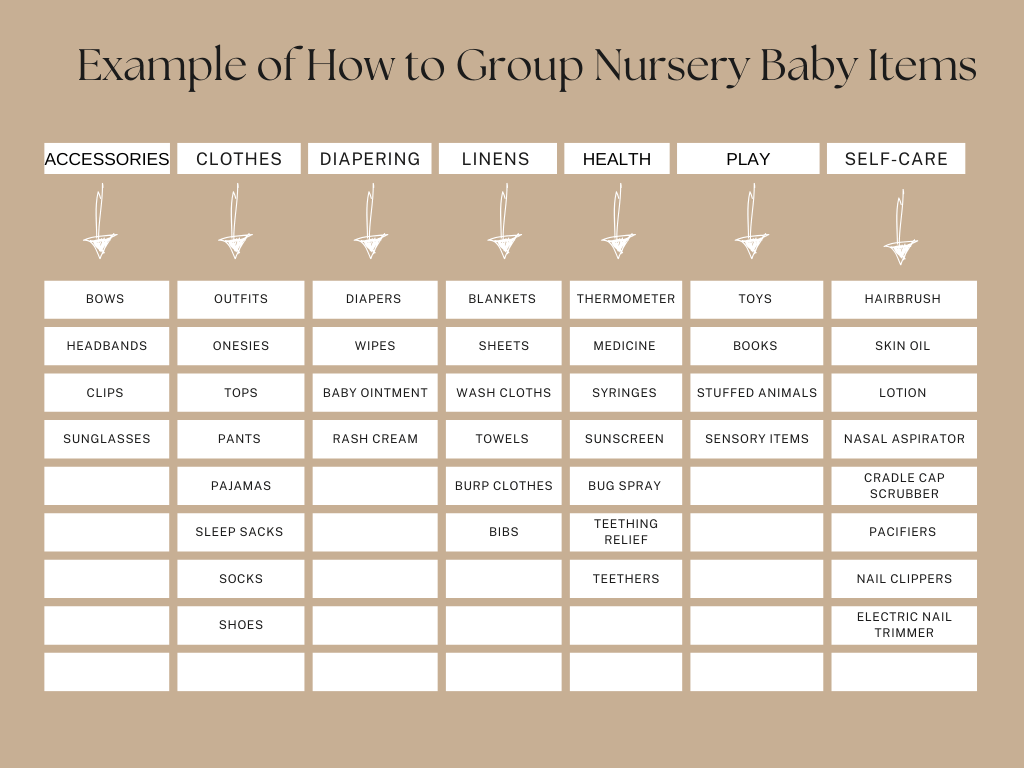
If you prefer planning on paper, write out your full nursery item list and group categories there first.
Once everything is grouped, you’ll clearly see what organization systems you actually need, instead of buying random storage bins you don’t use later.
That’s how you create a truly organized nursery.
Space-Saving Nursery Organization
One of the biggest mistakes I see? Storing everything you receive in the nursery. Nurseries are usually smaller in size, so you’ll want to store things elsewhere.
If you received 12 swaddles, you do not need all 12 in your dresser. Create a labeled storage bin like:
“Might Need Later”
Store extras in a closet, basement, or another room. Rotate items in as needed.
If space is limited, think beyond the nursery:
- Baby medicine can go in a bathroom cabinet
- Extra diapers can be stored in a hallway closet
- Backup wipes can live in a linen closet
And here is your permission slip: You don’t need to keep items just because they were gifted to you.
If you won’t use it or don’t love it, just donate it. Your nursery should feel calm, not cluttered because you feel guilty getting rid of it.
Types of Nursery Organization Systems
Baby nursery organization systems are ways to keep a nursery clutter-free, tidy, and efficient.
When every item has a place, your nursery stays clutter-free and functional, even when life feels chaotic.
The main nursery organization systems include:
- Dresser + changing station
- Drawer dividers
- Closet organizers
- Storage bins
- Shelving
Let’s start with the most important one.
Nursery Dresser Changing Station
Your nursery dresser will likely become the command central of the nursery. You’ll change countless diapers and outfits here, especially in the early months.
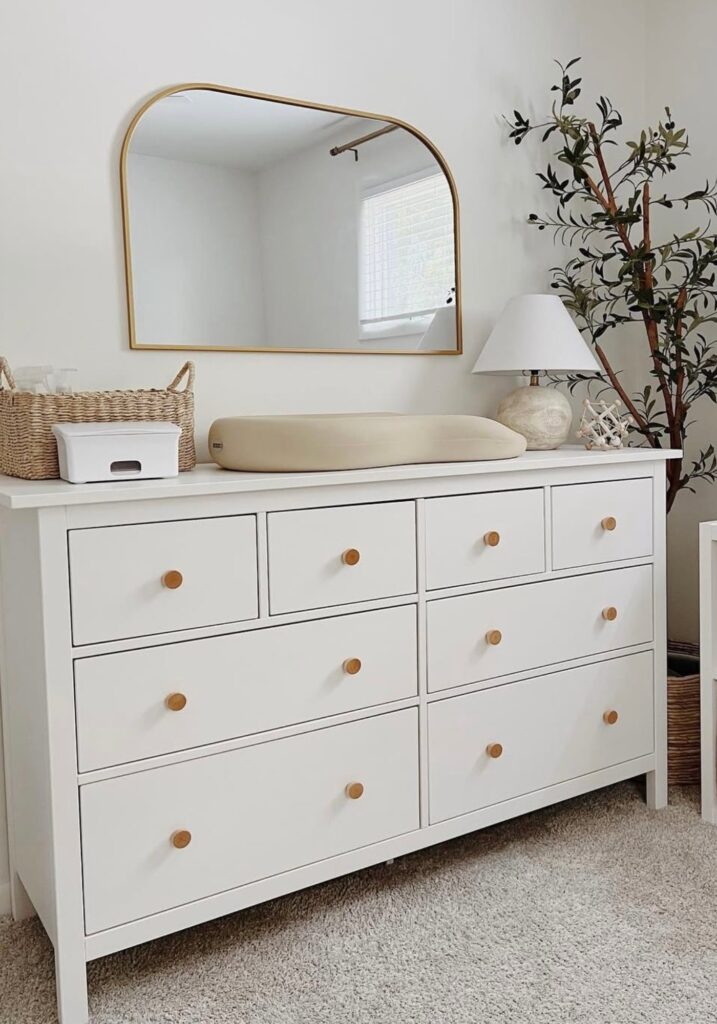
If your nursery allows, I recommend a large dresser for maximum storage space. Like the one you see above. If your nursery is on the smaller side, a more compact dresser can still have ample storage space when paired with drawer organizers and dividers.
Top of Dresser Baby Nursery Organization
The top of the dresser is where strong organization will make the difference. Instead of grabbing items from different places, everything should be within arm’s reach.
I highly recommend using a diaper caddy with compartments, to hold diapers, wipes, ointment, diaper rash cream, and other go to items you will use daily.
Here are my favorite diaper caddies that I’ve used over the years:
Diaper Refill Drawer Is a Must
A top drawer of your dresser, should be dedicated to diapering backups. Think of this as your quick refill station.
Inside the drawer store:
- Extra diapers
- Backup wipes
- Extra ointment & diaper rash cream
When your diaper caddy on top of the dresser runs low, you can restock in seconds without leaving the room.
3-Drawer Dresser Organization Example
Drawer 1: Diapering + Health
- Extra diapers
- Wipes
- Health items
- Ointments & creams
- Nail clippers, thermometer
Drawer 2: Everyday Clothing
- Short-sleeve onesies
- Long-sleeve onesies
- Pants
- Bodysuits
Drawer 3: Sleep Essentials
- Pajamas
- Sleep sacks
- Swaddles
6-Drawer Dresser Example
- Draw 1: Diaper refills + health items
- Draw 2: Everyday onesies
- Draw 3: Pants + leggings
- Draw 4: Pajamas + sleep sacks
- Draw 5: Swaddles + blankets + burp cloths
- Draw 6: Extra accessories (hats, sunglasses, shoes)
I highly recommend using the following organizers within your drawers:
- Drawer dividers (clear or white): These help separate clothing by type and keep diapering essentials neatly contained. They’re especially helpful for organizing onesies, pants, and sleepwear so items stay folded instead of turning into a pile.
- Fabric or clear acrylic drawer bins: Small bins are perfect for separating smaller items like thermometers, nail clippers, and creams, while larger bins can hold items like blankets, swaddles, or extra burp cloths.
- Label maker: Adding labels to your drawers makes it much easier to maintain your organization system over time. It also helps anyone helping with baby care quickly find where things belong.
If you want a full step-by-step breakdown, take a look at my guide on How to Organize a Nursery Dresser: From Top to Bottom.
Closet Baby Nursery Organization
Your nursery closet can hold a surprising amount of baby items when it’s organized intentionally. It’s the perfect place to store clothing that isn’t stored in dresser drawers. Some parents even prefer to hang up their onesies to monitor how many clothes they have for each age group.
If you’re still planning the overall layout of your nursery, you may also find my guide on The Ultimate 14-Step Guide to Designing a Nursery helpful for choosing furniture and creating a functional space.
The most common items parents store in a nursery closet include:
- Outfits
- Shirts and pants
- Jackets and sweaters
- Special occasion clothing
- Shoes
- Extra blankets or linens
Pro Tip
You can hang up pajama onesies so you can see how many you have available for each age group.
Use Closet Dividers to Organize Clothes by Size
One of the easiest ways to organize baby clothing in a nursery closet is by using closet dividers labeled by baby age.
Closet dividers help you see which clothes fit now and which ones are for upcoming months. This prevents you from accidentally forgetting about outfits as your baby grows.
Most divider sets organize clothing by age categories such as newborn, 0–3 months, 3–6 months, and up to 24 months, making it easy to maintain a tidy and functional nursery closet.
Here are my favorite closet dividers:
Closet with Shelves, Cubbies, and Decorative bins
Depending on the size of your closet, you may want to invest in an organization system. You can either DIY your own closet system or hire a professional to do so. This is especially helpful if your closet does not have a quality organization system in place.
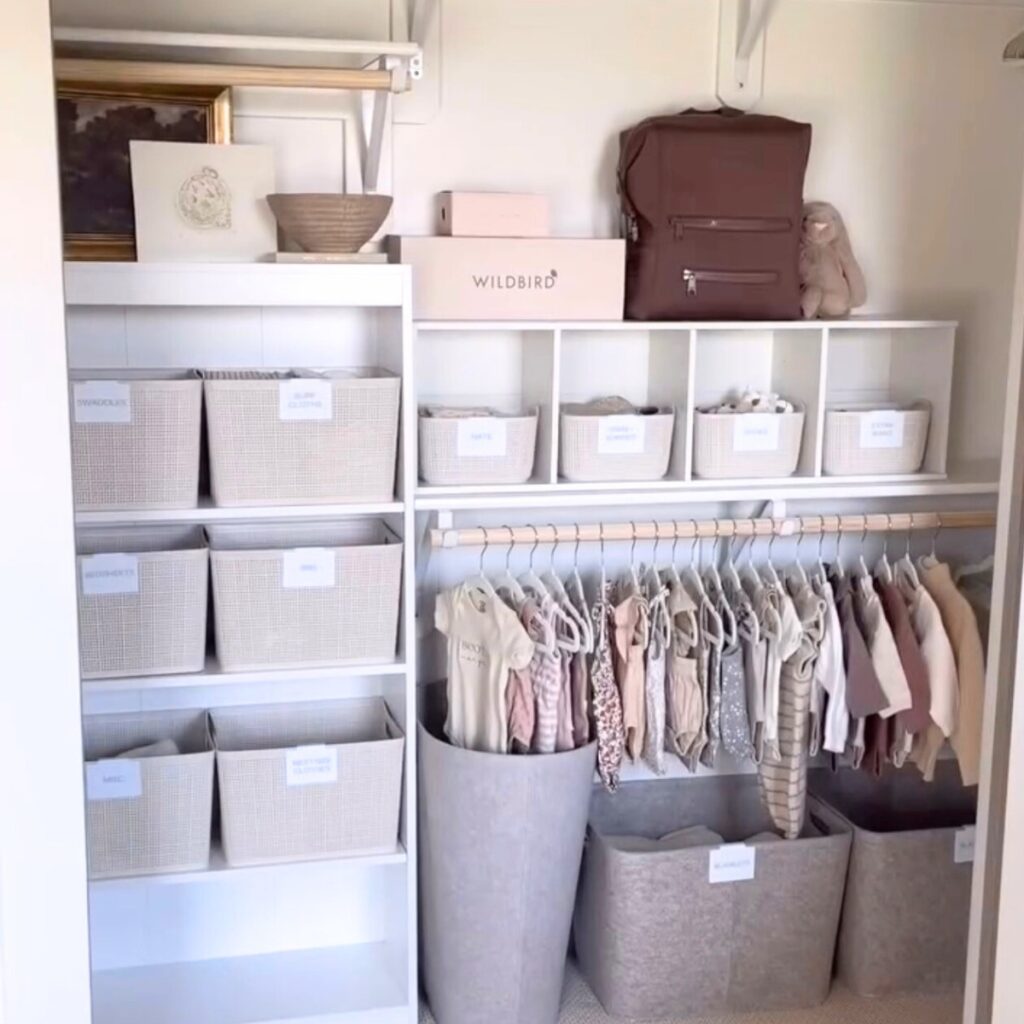
This neutral nursery closet is so warm and inviting. The baby items are organized with a shelving system that includes shelves, cubbies, bins, and, of course, a clothing rod. You can find similar products here for your closet:
- Light Gray Laundry Bin
- Large Gray Bins
- Neutral Baby Hangers
Pro Tip
Always measure your shelves and bins to see if your bins will fit on the shelves before purchasing.
Closet with Cube Organizer
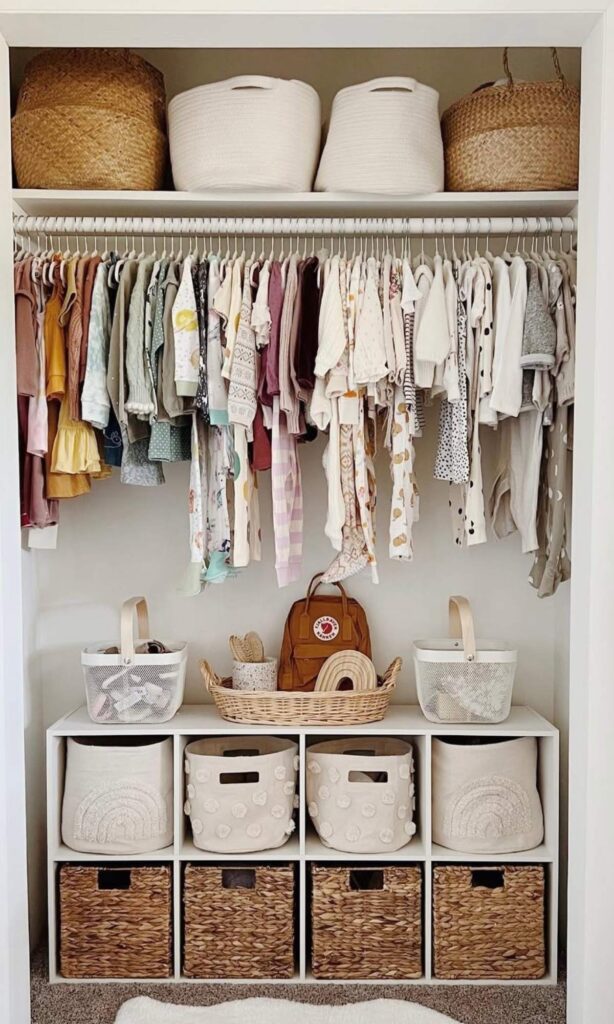
Adding a cube organizer to the bottom of your closet can add more storage room to your closet. I currently have a cube organizer in my son’s nursery, and I love it so much!
Closet with Drawers
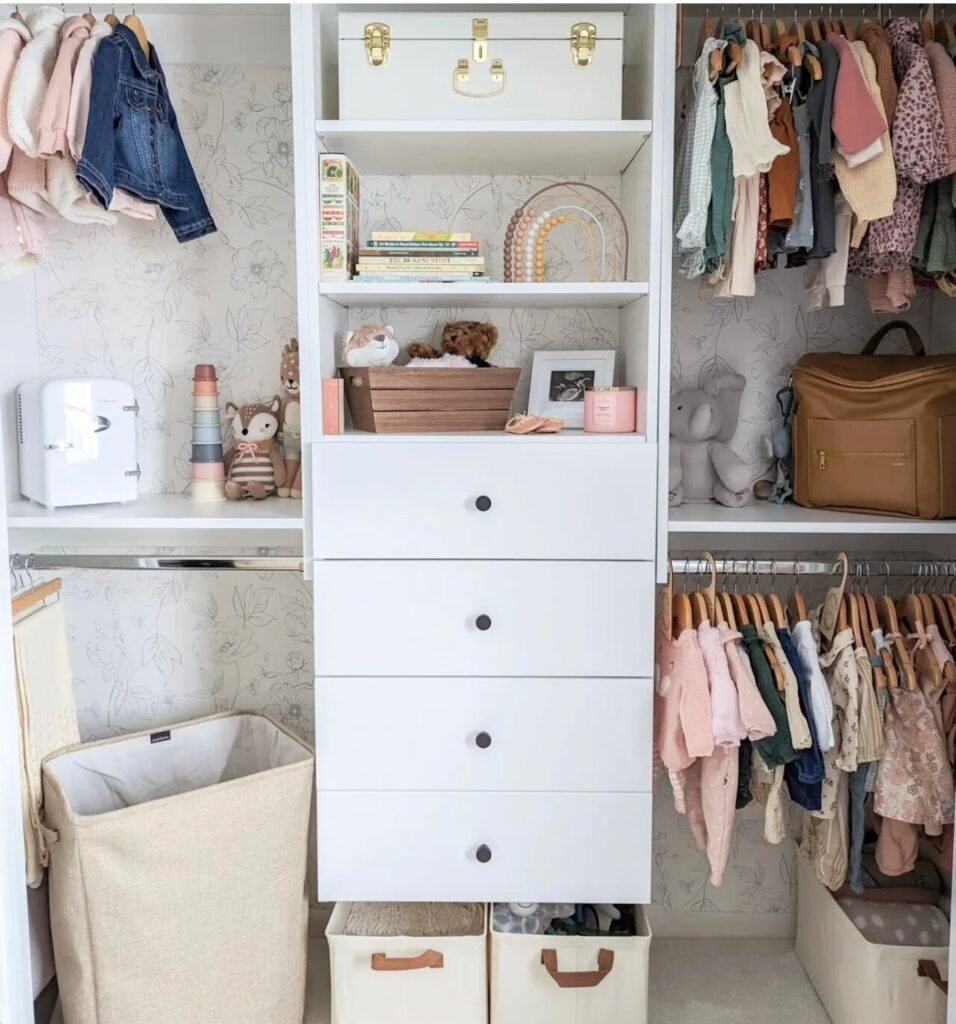
A closet with drawers is a fantastic addition to any nursery. It’s not only aesthetically pleasing, but it also offers more organized storage space. In the drawers you can neatly store babies onesies, pajamas, shoes, hats, socks, etc., keeping everything accessible and easy to find.
Closet with Door Organization

Closet door baby nursery organization systems can maximize storage space in a nursery. By using over-the-door organizers, hooks, and shelves, you can store many baby essentials. This includes wipes, diapers, bottles, toys, books, bows, and clothing.
Toys & Book Baby Nursery Organization
Although your baby will not be able to play with toys straight out of the womb, it’s best to think of the future and what type of storage you want to store your kid’s toys in. You can organize toys and books in the following ways:
A Cube Organizer With Bins
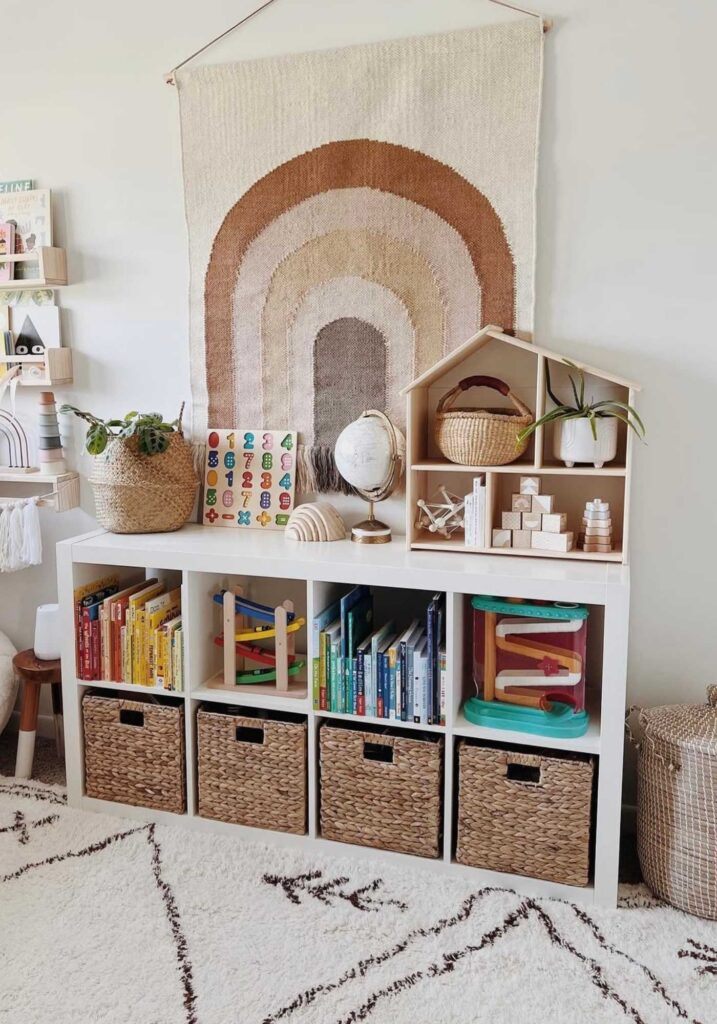
Cube organizers allow you to store books, toys, and so much more. Adding bins to a cube organizer enhances the functionality and appearance. Bins hide clutter, creating a more visually appealing space.
Toy Storage with Bins
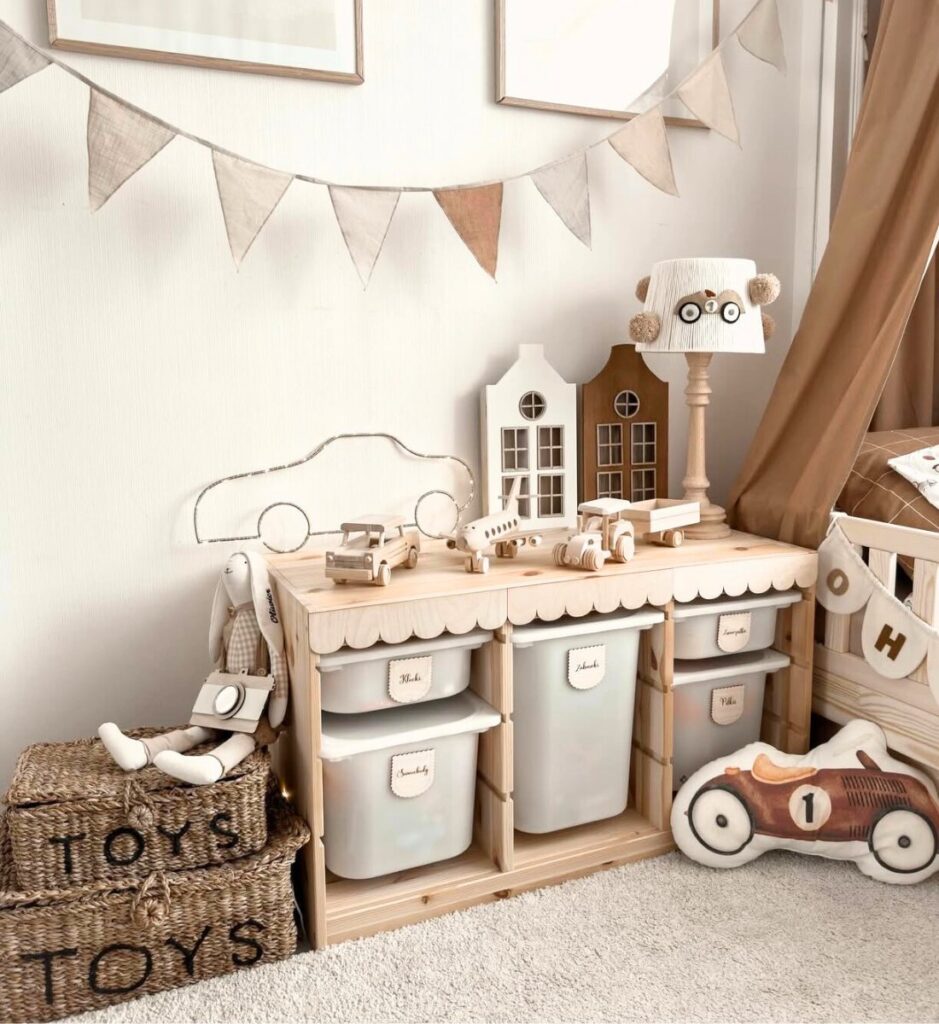
Furniture designed for toy storage is a great way to keep toys organized and easily accessible in your nursery. Having a designated place for toys helps reduce clutter and makes cleanup much easier for both you and your little one.
A toy storage cabinet with bins or cubbies works especially well because it allows you to sort toys by category while keeping everything visible and easy to grab.
Wall Bookshelves

Wall-mounted bookshelves are a great solution for storing books while also adding a decorative touch to the nursery. Shelving helps keep books organized and within easy reach. You can put your favorite titles on the shelf, or you can switch out the books based on holidays or themes.
Wall Baskets
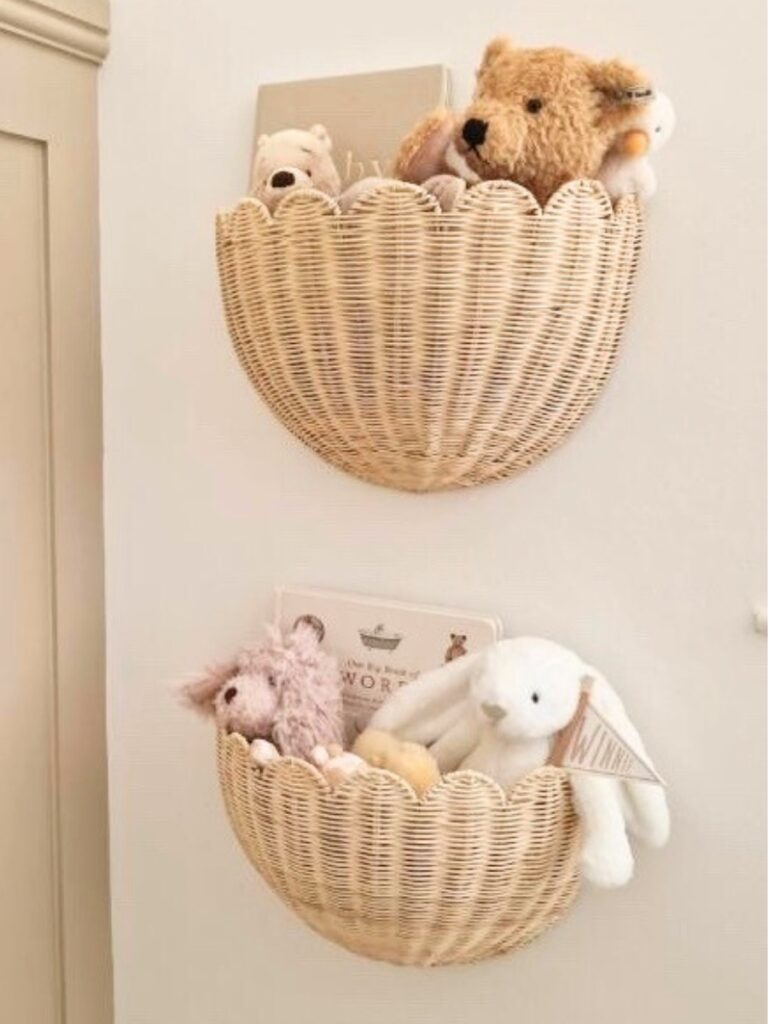
Nursery wall baskets are a creative and fun way to organize stuffed animals, books, toys, and so much more. They keep essentials easily accessible, add a decorative touch, and save floor and surface space.
Large Floor Storage
Large floor storage pieces can be incredibly helpful in a nursery because they provide a place to store bulkier items that don’t fit well in drawers or closets. These storage options are perfect for holding toys, books, baby blankets, extra linens, and even laundry.
Items like storage trunks, wicker baskets, and low book organizers are great additions to an organized nursery. Not only do they provide extra storage, but they also help keep everyday items contained and easy to access.
Storage Trunks
Toy chests and storage trunks are a great solution for storing an abundance of toys, blankets, and extra nursery items. They allow you to keep larger items neatly tucked away while still having them easily accessible when needed.
A storage trunk is especially helpful for quickly tidying up the nursery at the end of the day since toys and blankets can be placed inside in seconds.
I personally love this large neutral storage trunk for toy storage, but it can also be used to store blankets, stuffed animals, or extra bedding. This would fit the style of many nurseries.
Large Standing Floor Baskets
Large floor baskets are a good way to decrease clutter in a nursery while keeping everyday items easy to access. They’re perfect for storing toys, blankets, laundry, and other items that don’t fit nicely in drawers.
If you’re looking for a stylish and beautiful storage option, take a look at this set of two wicker baskets. They’re perfect for keeping baby items organized while adding a nice decorative touch to the nursery.
Floor Book storage
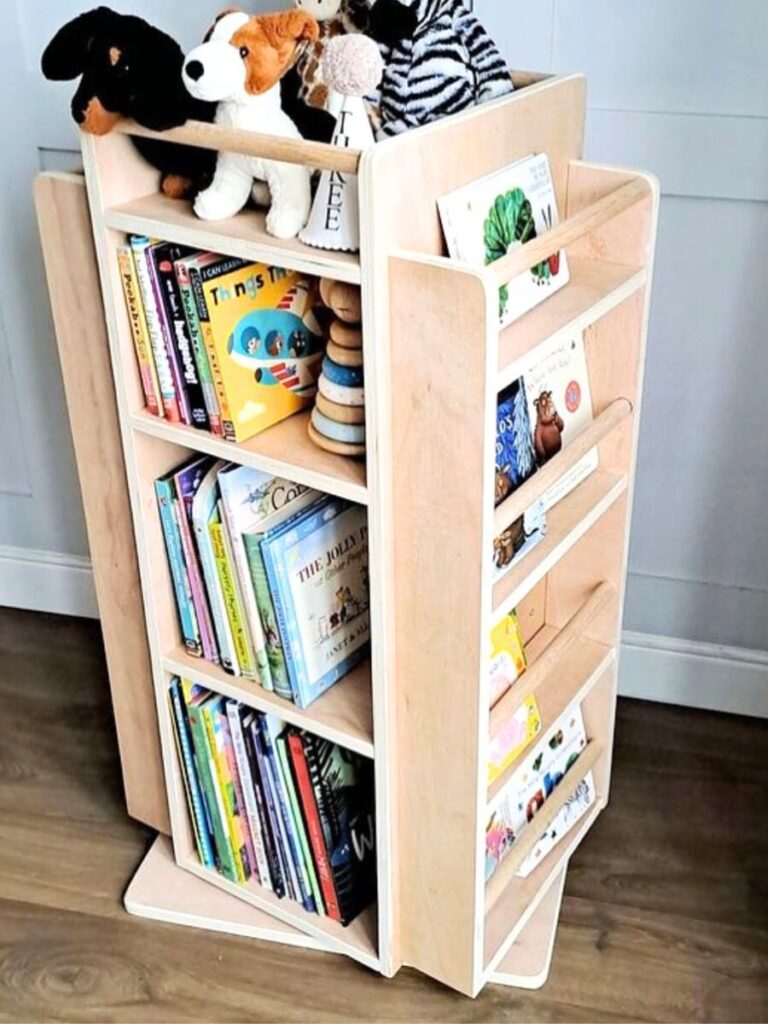
Floor book storage is a great way to organize all the adorable books you’ll receive from friends and family. This type of storage keeps books easily accessible, fosters a sense of independence, and adds visual appeal to the nursery, encouraging kids to explore and engage with books.
I personally think a rotating bookshelf like this one is such a cool option and really appealing for kids.
Pro Tips for Nursery Organization
- Take your time organizing the nursery.
You have months to get everything set up, so don’t feel like you need to organize the entire room in one day. - Choose organization systems that match your routines.
Think about how you’ll actually use the nursery daily, like diaper changes, dressing your baby, and putting items away. - Don’t settle for organizers that don’t work.
If you purchase an organizer that doesn’t fit your space or needs, return it and find one that works better. - Organize the nursery one project at a time.
Start with one area like the dresser, closet, or toy storage, so the process feels manageable.
Conclusion
Now you’re ready to organize your nursery like a pro! Baby nursery organization can truly be a game-changer when it comes to managing life with a newborn.
By sorting baby items into categories, investing in smart organizational systems, identifying items you won’t need, and labeling everything, you can create a space that’s not only functional but also calm and stress-free. With these simple strategies, you’ll have everything you need right at your fingertips, making daily routines smoother and more efficient.