Free Kitchen Organization Chart: How to Organize Your Kitchen by Zones
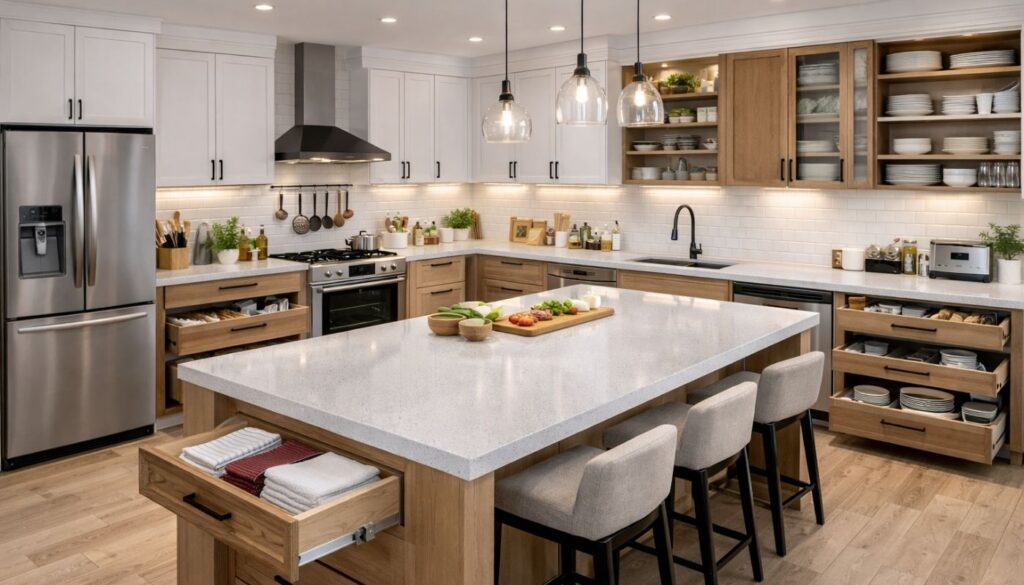
This post will help you organize your kitchen using a free kitchen organization chart based on 8 functional kitchen zones.
The kitchen is the central hub of the home, and when it is cluttered, disorganized, or not functioning properly, it can affect the entire household. An unorganized kitchen leads to wasted time, frustration, and unnecessary stress. Organizing your kitchen into zones gives everything a clear purpose and place, from the items stored in your cabinets and drawers to the things you use every day on your countertops.
If opening your cabinets makes you feel overwhelmed, you’re ready to get the chaos under control, or you’re simply looking for kitchen organization ideas that can improve your kitchen’s flow, this post is for you.
I’ve created this free kitchen organization chart to help you organize your kitchen by zones and categories. This chart will help you decide where to put things in your kitchen cabinets and drawers, create a functional kitchen, and build organization systems that fit your everyday routines.
Before You Use the Kitchen Organization Chart
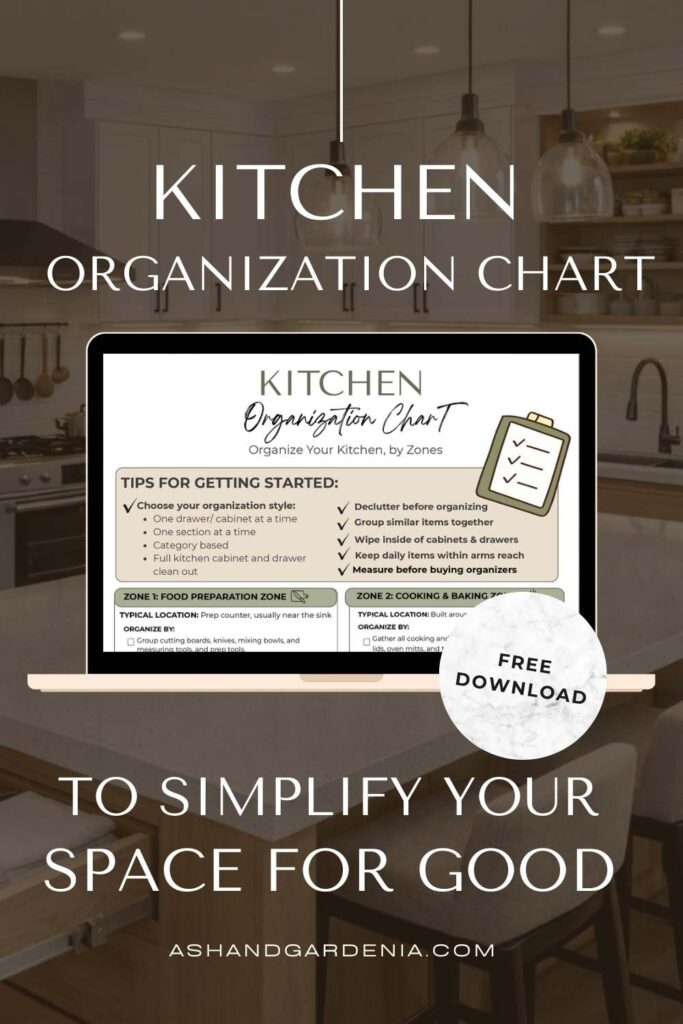
Before we dive into the kitchen organization chart and how to use it, let’s talk preparation. Organizing your kitchen is a big project, and having a plan in place will make the process smoother and far less overwhelming.
Organization and cleaning go hand in hand. If staying on top of messes is a struggle, these 24 Ways to Keep a Kitchen Clean when Life Gets Messy pair perfectly with this chart.
If you would rather jump right in, that’s completely fine too. But a few simple prep steps can make organizing your kitchen much easier.
Here are a few things to do before you begin:
- Set aside enough time. Depending on the current state of your kitchen, organizing may take several hours or be spread out over a few days. You don’t need to finish everything at once.
- Set up a sorting area. Keep garbage bags, a recycling bin, and a donation box nearby so you can quickly remove items you no longer need as you go.
- Gather your cleaning supplies. This is a good opportunity to wipe down cabinets, drawers, and shelves before putting everything back.
- Decide what you want to improve. Your goal might be creating more counter space, making your cabinets and drawers easier to use, or simply giving everything a designated place.
- Be willing to move things. Don’t assume an item has to go back into the cabinet or drawer where you’ve always kept it. As you work through your kitchen zones, you may find a more functional place for it.
- Work through one zone at a time. Finish one area before moving to the next to keep the project manageable and avoid having your whole kitchen pulled apart at once.
Now that you’re prepared, let’s walk through how to organize your kitchen by zones and create a setup that works best for you.
Strategies for Organizing Your Kitchen
There is no single right way to organize your kitchen. The best approach depends on your kitchen layout, your daily routines, and how much visual clutter you can handle at one time.
If you don’t have a preferred organizational style, choose one of the strategies below that feels realistic for you. While many organizing guides recommend taking everything out at once, that approach can feel chaotic and overwhelming for some people.
Ways to Organize with the Kitchen Organization Chart
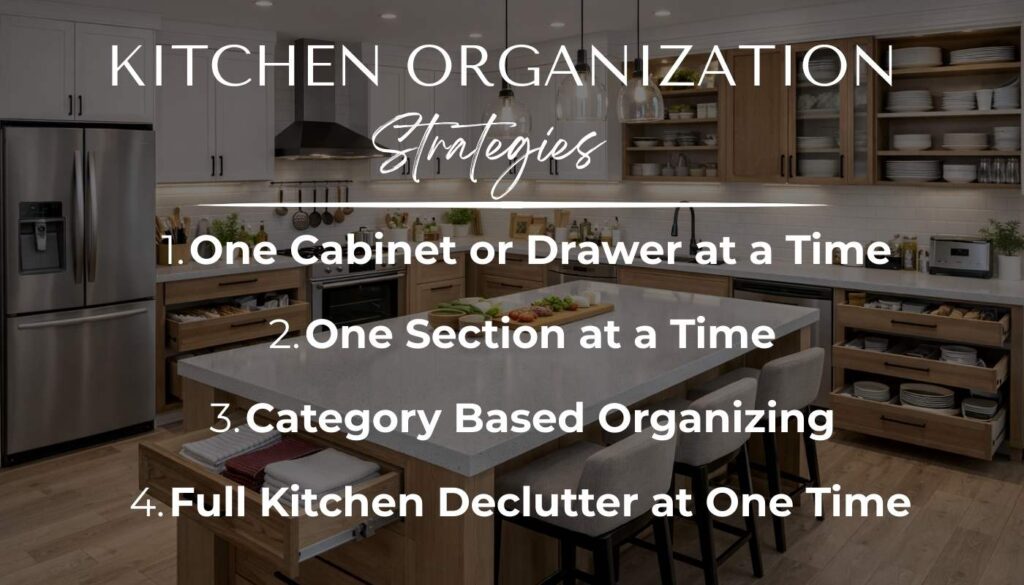
Strategy 1: One Cabinet or Drawer at a Time
Start with one cabinet, one drawer, or a small space. Remove everything, declutter items you no longer use, group similar items together, and clean the space. Measure the area if you plan to add organizers and write the measurements down. Put items back once you are finished, or leave them out if you think they may work better in a different location.
This strategy works best for someone who prefers to work slowly, wants steady progress, and feels overwhelmed by too much visual clutter at once.
Strategy 2: One Section at a Time
Select a full section of the kitchen, such as the pantry, utensil drawers, or dish cabinets. Remove everything from that section, declutter, categorize, remove items that don’t belong, clean the space, and measure for organizers. Return items to the same area or label them to be moved to a better zone.
This approach is perfect for someone who likes seeing progress in one noticeable area before moving on.
Strategy 3: Category-Based Organizing
Instead of organizing by location, gather similar items from around the kitchen into one place. For example, collect all baking items, food storage containers, or cooking utensils. Declutter, reorganize by category, decide on the best space for each group, clean the space, and then start putting items away.
This strategy works best for kitchens that have grown messy over time and where items are scattered throughout the space.
Strategy 4: Full Kitchen Declutter at One Time
Remove everything from every drawer and cabinet and place items on the countertops or kitchen table. Declutter, categorize, and clean all spaces; remove what doesn’t belong, then rebuild the kitchen from scratch.
This method works well for people who can handle visual clutter, stay focused with everything out, and know they can finish the project in one day. If you have limited counter space or know that visual clutter stresses you out, this strategy may not be the best fit.
Side Note: Personally, I cannot handle too much visual clutter at a time. My brain gets overwhelmed quickly.
Choose the strategy that feels doable. The goal is a completed kitchen, so if a slower method or working section by section over several days works better for you, there’s no reason to feel guilty about that.
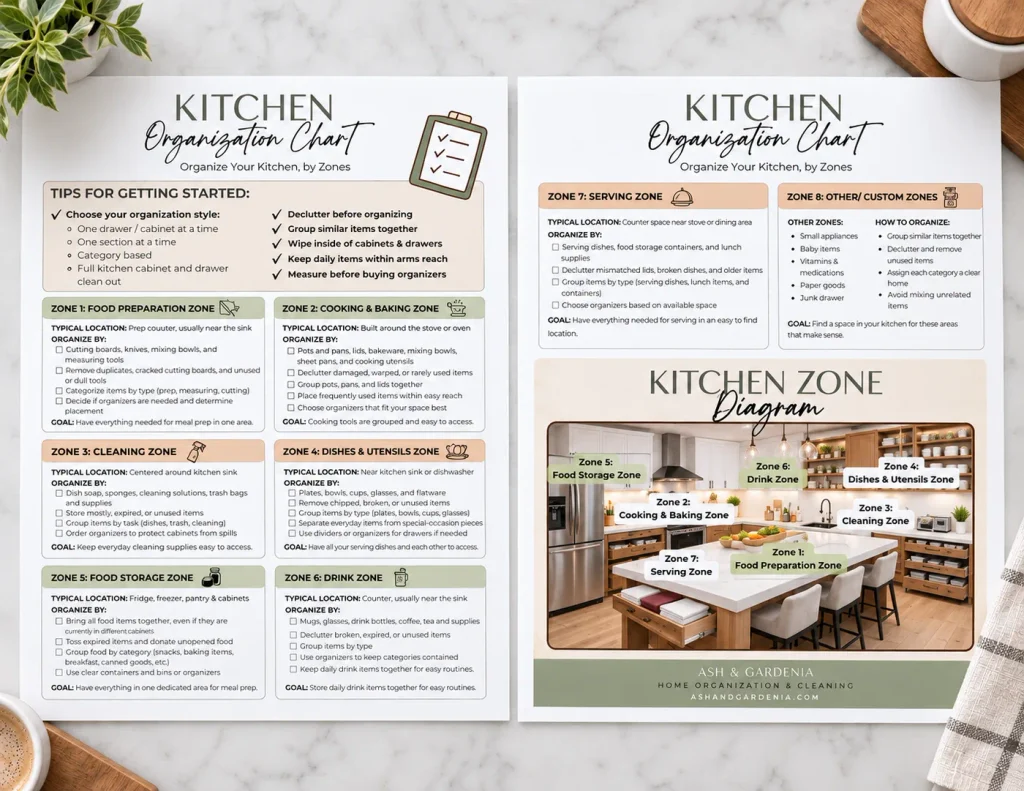
Now that you’ve chosen your organizing strategy, it’s time to work through your kitchen one zone at a time. Use the kitchen organization chart below to help you decide where different categories and everyday kitchen items should go.
Want a copy to use as you organize? I’ve also created a free printable Kitchen Organization Checklist that walks you through each kitchen zone. You can grab it below and keep it nearby as you work.
What Are Kitchen Zones?
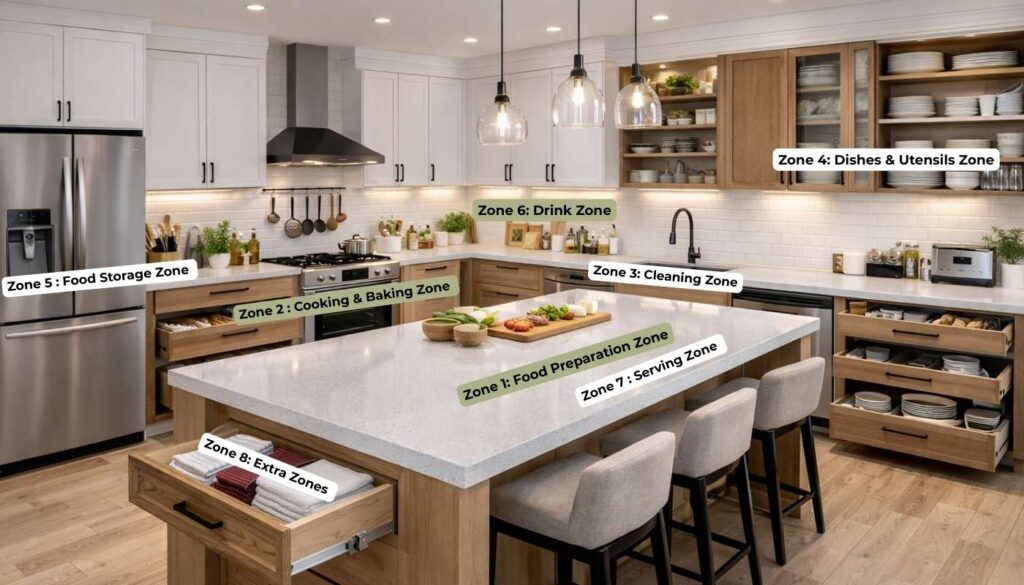
Kitchen zones are specific areas of the kitchen that focus on a single function. Think cookware near the stove, plates and dishes near where you serve food, or cleaning supplies near the sink. Organizing by zones makes it easier to group similar items together, create logical storage, and maintain organization long-term.
Your kitchen organization layout will look different depending on the size of your kitchen, where your cabinets and drawers are located, and how you use the space every day.
If you’d like a deeper breakdown of how kitchen zones work, check out my guide on, Where to Put Things in Kitchen Cabinets and Drawers by Zones, where I explain each zone and what belongs there in more detail.
Kitchen Organization Chart by Zones
The kitchen organization chart below breaks your kitchen into 8 functional zones and shows what to organize within each one. Use it as a starting point rather than a strict layout. Where you place each zone will depend on your kitchen layout, available cabinets and drawers, and the way you use your kitchen every day.
Zone 1: Food Preparation Zone
Location:
Prep counter, usually near the sink.
Organize By:
- Group cutting boards, knives, mixing bowls, measuring tools, and prep tools
- Remove duplicates, cracked cutting boards, and unused or dull tools
- Categorize items by type
- Decide if organizers are needed and determine placement
Goal:
Have everything needed for meal prep in one dedicated area.
If your kitchen counters are feeling cluttered and getting in the way of food prep, check out my 32 Ways to Organize Kitchen Countertops for a Clutter-Free Kitchen for simple ideas to create a more functional prep space.
Zone 2: Cooking & Baking Zone
Location:
Around the stove or oven.
Organize BY:
- Gather pots, pans, lids, cooking utensils, bakeware, oven mitts, and trivets
- Declutter damaged, warped, or rarely used items
- Group pots, pans, and lids together (store lids vertically)
- Place frequently used items within easy reach and heavy items in lower cabinets
- Choose organizers that work best for your space
Goal:
Cooking tools are grouped and easy to access.
If pots and pans always feel tricky to store, this pots and pans guide covers 18 organization ideas and helps you choose the best setup.
Zone 3: Cleaning Zone
Location:
Centered around the kitchen sink.
Organize By:
- Gather all soap, sponges, dishwasher pods, cleaning solutions, and gloves
- Toss empty, expired, or unused items
- Group items by task (dishes, trash, cleaning)
- Store items by category, usually under the sink
- Order organizers to protect cabinets from spills
GOAL:
Keep everyday cleaning supplies easy to access.
Zone 4: Dishes & Utensils Zone
Location:
Near sink or dishwasher
Organize By:
- Group everyday dishes, drinkware, flatware, and serving utensils
- Remove chipped, broken, or unused items
- Group items by type (plates, bowls, cups, glasses)
- Keep daily-use items in arm’s reach and special items farther away
- Purchase organizers like drawer organizers or cabinet risers
Goal:
Keep everyday dishes and utensils organized and easy to access, ideally near the sink or dishwasher.
Zone 5: Food Storage Zone
Location:
Pantry, cabinets, fridge, and freezer.
Organize By:
- Pull all food items together, even from different areas
- Toss expired food and donate unopened non-perishable food items
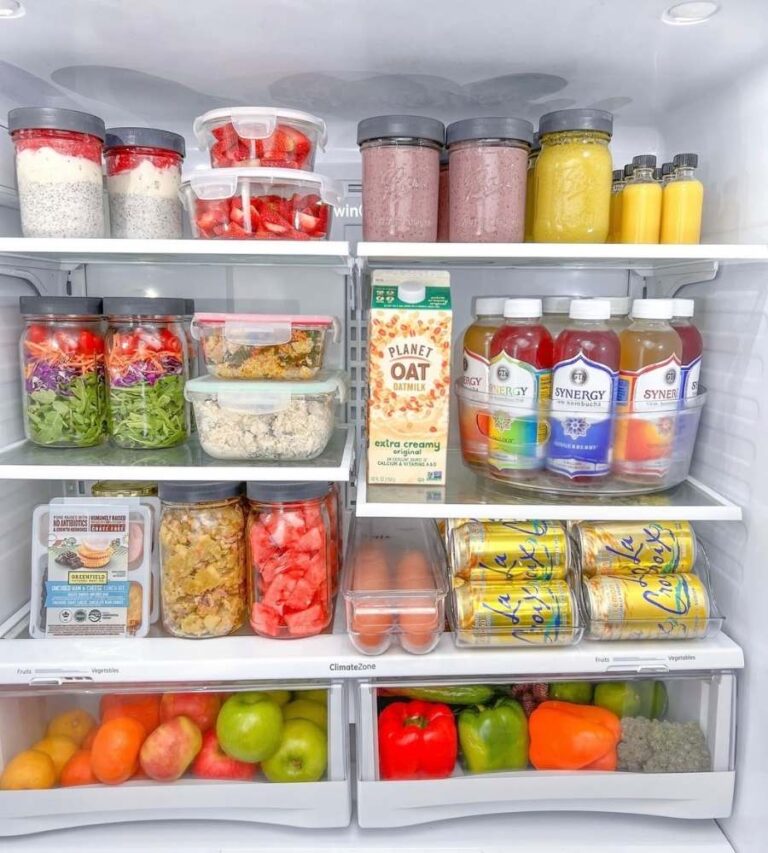
- Group food by category (snacks, baking items, breakfast, canned goods, etc.)
- Keep categories together using bins or organizers
Goal:
Keep food organized by category so it’s easy to see what you have, find what you need, and prevent food from getting lost or forgotten.
If your pantry feels chaotic, these 30 brilliant kitchen pantry organizing ideas dive deeper into storage solutions and layouts. And if you’re looking for the right containers for pantry staples and dry goods, check out my complete guide to the best pantry storage containers for different sizes, materials, and styles.
Zone 6: Drink Zone
Location:
Counter area, usually near the sink.
Organize By:
- Gather mugs, glasses, drink mixes, coffee, and tea supplies
- Declutter broken, expired, or unused items
- Group items by drink type (coffee, tea, cold drinks, to-go items)
- Use organizers to keep categories contained
Goal:
Store daily drink items together to support easy routines.
Zone 7: Serving Zone
Location:
Counter space near stove or dining area.
Organize By:
- Gather serving dishes, food storage containers, and lunch supplies
- Declutter mismatched lids, broken dishes, and older items
- Group items by type (serving dishes, lunch items, and containers)
- Keep kitchen countertops organized by limiting the serving items you keep out
- Choose organizers based on available space
Goal:
Have everything needed for serving and leftovers in one easy-to-access location.
Zone 8: Other/Custom Zones
Location:
Anywhere that fits your routine
OTHER ZONES
- Small appliances that aren’t used daily
- Baby items
- Vitamins & medications
- Paper goods
- Junk drawer
How to Organize Kitchen Cabinets and Drawers By Zones
Once you decide on your kitchen zones, the next step is figuring out where everything should go within your cabinets and drawers. Instead of automatically putting items back where they’ve always been stored, think about where you’ll actually use them.
Quick Kitchen Cabinet and Drawer Organization Checklist
- ✓ Keep frequently used items within easy reach.
- ✓ Store items close to the zone where they’re used.
- ✓ Keep pots, pans, and cooking utensils near the stove.
- ✓ Store everyday dishes and flatware near the dishwasher when possible.
- ✓ Place heavier items in lower cabinets.
- ✓ Use upper or harder-to-reach cabinets for items you don’t use as often.
- ✓ Group similar items together instead of spreading them throughout the kitchen.
- ✓ Don’t be afraid to move something if another cabinet or drawer makes more sense.
- ✓ Measure cabinets and drawers before purchasing organizers.
Sometimes improving your kitchen cabinet organization or kitchen drawer organization is as simple as realizing something would function better in a different location. For a complete breakdown of where everything should go, check out my guide to Where to Put Things in Kitchen Cabinets and Drawers by Zones.
I hope this kitchen organization chart makes organizing your kitchen feel a little easier. Remember, you don’t have to organize everything at once. Work through one zone at a time, make adjustments based on your kitchen layout, and find a system that works for your everyday routine.
If you haven’t grabbed your free Kitchen Organization Chart yet, you can get it below. It includes the 8 kitchen zones and a checklist you can use as you work through your kitchen.
More Kitchen Organization Ideas:
- Where to Put Things in Kitchen Cabinets and Drawers by Zones
- 24 Ways to Keep a Kitchen Clean When Life Gets Messy
- 28 Aesthetic Kitchen Organization Ideas for a Stylish Home
- 30 Brilliant Kitchen Pantry Organizing Ideas for Every Home
- 18 Space Saving Pots and Pans Storage Ideas You’ll Love
- 32 Ways to Organize Kitchen Countertops for a Clutter-Free Kitchen
- 25 Under Kitchen Sink Organization Ideas for a Clutter-Free Cabinet
- The Best Pantry Storage Containers: A Complete Buying Guide