How to Start Decluttering When You’re Totally Overwhelmed (Simple Steps to Get Unstuck)
This post may contain affiliate links. As an Amazon Associate, I earn from qualifying purchases at no extra cost to you.
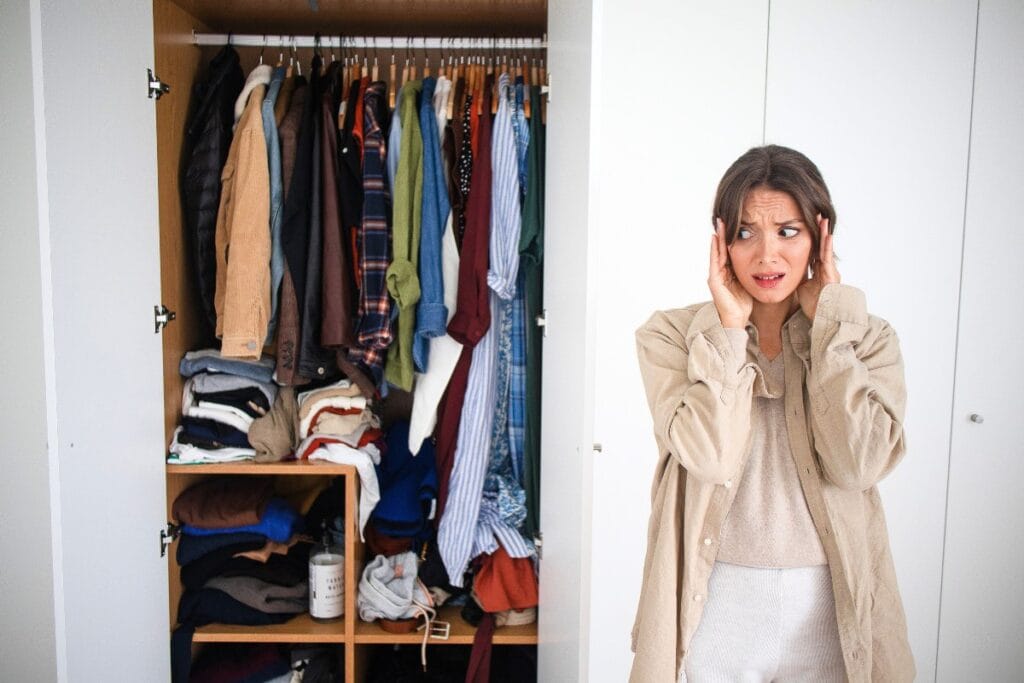
Do you feel your home is weighed down by excess clutter? Does overwhelm set in as you move from room to room? Are everyday items hard to find amidst the chaos? Are you really struggling with how to start decluttering when overwhelmed?
If you answered yes to these questions, do not worry, you are not the only one who feels overwhelmed by tackling their clutter in their home. A recent study by Talker Research for the Container Store revealed that half of all Americans believe they have at least one room in their home that is “unsalvageable” due to clutter. In other words, many people are living in homes with excessive clutter.
Now that you know you are not alone, in your decluttering journey, please give yourself grace and compassion. Especially if you have procrastinated on a home decluttering job for years. Decluttering is not an easy job. It takes time, energy, and the ability to detach yourself from possessions you really do not need anymore.
Do not worry! I have been passionate about decluttering my whole life, and I have some tips to teach you on how to start decluttering when overwhelmed. If you are wondering how to begin decluttering, be sure to read this post through to the end. It’s filled with helpful tips and strategies to guide you on your decluttering journey.
Health Benefits of Decluttering
Before we go into how to start decluttering when overwhelmed, let’s talk about the health benefits of a decluttered and organized home. Decluttering has been correlated with many health benefits. A study by the University of Connecticut found that by removing or controlling clutter, we can directly reduce the stress that stems from the mess, which can help us to feel happier, less anxious, and more confident in ourselves. Decluttering can also improve your sleep, physical and mental health, and boost your mood. If you’re currently feeling overwhelmed, tired, or anxious due to the amount of stuff around your home, knowing these health benefits can motivate you to start ditching the clutter.
How to Start Decluttering When Feeling Overwhelmed
There are multiple many ways to begin decluttering when feeling overwhelmed, and it’s important to find what works best for you. I’ll outline nine different approaches below, each offering a unique perspective on how to tackle the process. Take your time to explore them and choose the ones that truly resonate with you.
1. Work on Your Mindset First

Mindset affects every aspect of your life. This is especially true when it comes to decluttering. If you are overwhelmed with too much stuff, it’s essential to have the mindset that you can achieve a decluttered home. If you are constantly negative about your cluttered home and feel you will never achieve a clutter-free home, then you will most likely never achieve your goal. Going into decluttering with the mindset that you will be successful is the first step in the process of obtaining a house free of too much stuff.
Why is it so difficult to start Decluttering?
I think it is essential to first dive into why it may be difficult to start decluttering. After all, it’s most likely one of these reasons I’m about to go into that brings you overwhelm. By knowing why the process of decluttering brings anxiety, overwhelm, and procrastination, we can address the problem head on and get to the root of our decluttering overwhelm.
Typical Causes for Decluttering Overwhelm
There are many reasons why you may feel overwhelmed when thinking about how to start decluttering. Overwhelm is an awful feeling that can be triggered by several reasons.
- It’s a Learned Skill: Decluttering is a learned skill. Some people learned the skill of decluttering when they were young, and some people did not. If your parents held on to everything, you saw that, and most likely tend to do the same.
- Time: Decluttering takes time, and many people feel like they do not have the time nowadays to devote to a decluttering project.
- Energy: Whether life is busy, you’re struggling with a physical and mental health issue, or you are not sleeping at night, having the energy to tackle a decluttering home project might feel like it will deplete you more.
- Emotional Attachment: You may have developed strong emotional attachments to belongings, making belongings your sense of self or part of your identity. People can be attached to everyday items, gifts from loved ones, and even items that should be garbage. Letting go of these items can feel like you are losing your sense of self.
- Perfectionism: You may feel paralyzed by perfectionism. You want the decluttering process to be perfect, so you do not start the process.
- Roommate Decluttering Problem: Someone you live with may also struggle with decluttering, which causes more overwhelm.
- Sentimental or Feelings of Guilt: You might label items as sentimental, or you can feel guilty throwing out items that were given to you by another person.
- Accumulation of Items Over Time: If you do not declutter once or twice a year, items will build up in your home over time. When you finally get around to decluttering, it seems overwhelming because of how many items there are to declutter.
- Spending Issue: You may have a spending issue that causes you to continually buy items. If you are not removing any items from your home, then the stuff is just building up.
- Indecision: A decluttering obstacle for you may be not knowing what to keep and what to throw out. Slow decision-making can slow the process of decluttering, making you quit altogether.
Identify What is Making You Feel Overwhelmed about Decluttering
Look at the list above and identify what is making you feel overwhelmed about decluttering. For me, when I want to start something new or something I haven’t really done in a while, I tend to procrastinate and be a perfectionist which stops me from starting the task I wish to start. It’s normal to avoid new and hard tasks. But the more you avoid the task, the more overwhelmed and anxious you will tend to feel. I have made it a recent goal of mine to dive into learning new skills, well knowing things will not be perfect. I, personally, could not live in my procrastinating phase of my life anymore.
Self Talk and Tackling Your Thoughts
Whether you feel like you have no energy, you accumulated far too many items, or you’re just procrastinating, everyone is capable of changing their mindset around clutter. Tell yourself you are capable of decluttering and making a home that is organized, functional, and peaceful. Repeat this to yourself often. You deserve to feel calm, less anxious, and stress-free in your home. If you do not tackle your negative thoughts around clutter, you will never truly learn how to start decluttering when overwhelmed.
By reading this post, you are already setting yourself up for success on your decluttering journey. I am also guessing you’ve reached your breaking point with clutter and are highly motivated to take control of your overwhelming home environment.
2. Decluttering Motivation and Goals
Discover your “why.” Why do you want to declutter? Maybe your home is becoming less functional or unmanageable, and you crave a space that feels calm and peaceful. Perhaps you want to create a healthy environment for your kids. Whatever your reason, your “why” will be the driving force that motivates you to finish your decluttering tasks.
Your decluttering goals should reflect what you’re trying to achieve. Goals need to be clear and realistic so they feel attainable. Setting a goal to declutter your entire home in one day isn’t practical, especially if you haven’t decluttered in years. Instead, break your goals down into smaller, manageable tasks. For example, a more achievable goal could be to declutter my kitchen cabinets on Sunday.
You can either take a mental note of your goals or write them down somewhere visible, like on a notepad or the backdrop of your phone. These are specific actions you’ll take as you declutter. A study, by Schunk and Zimmerman, found that goal setting was found to reduce stress by providing individuals with a sense of control over their tasks. When individuals are clear about what they need to achieve and have a plan in place, they are less likely to feel overwhelmed by their responsibilities.
When I go into my decluttering frenzies, I think of my goals often. My recent decluttering goal in my kitchen was to throw out any expired or unused items. Followed, by reorganizing what was in certain cabinets for better functionality.
Your goals could be the following:
- Declutter my kitchen cabinets.
- Donate or discard old kitchen appliances
- Tidy up my bedroom closet
- Declutter my bedroom drawers
- Clean out the garage
- Clean out the basement in sections
Achieving smaller actionable goals will help you make progress and lessen your feelings of overwhelm.
3. Set Deadlines and Use a Timer to Prevent Overwhelm

Adding decluttering goals to your calendar ensures you will stay on track in completing your decluttering projects. It’s proven that if you write tasks down, you are more likely to complete the task. Be sure to break your tasks into manageable chunks each day.
If you intend to declutter your whole home, it’s unrealistic to tackle that all in one day. START SMALL!! Add small, specific decluttering tasks to your to-do list. For example, “On Monday, I will clean out my kitchen utensil drawer” and “On Wednesday, I’ll clean out my spice drawer or cabinet and throw out expired spices.” With this approach, you will achieve something each week, building momentum and a sense of achievement.
A timer can be a helpful tool to use during decluttering. It will help you stay focused on the task at hand and prevents you from switching to something else.
However, one downside is that it can add pressure to finish quickly. It’s important to set realistic time limits on your declutter projects and avoid being hard on yourself if the timer goes off before you finish. Here are 16 helpful decluttering tips to help you maintain a clutter-free home.
4. Stop Yourself When You Have Monkey Brain
Listen to this closely! Begin in one room, stick to one task, and resist the urge to leave the room or jump to another task. Typically, when overwhelm sets in, it’s easy to become scatterbrained and lose focus. Rather than focusing on the task at hand, we often start another task before finishing the first. This further perpetuates overwhelm.
I do this all the time myself and often have to use self-talk to refocus on the task I was originally working on. Rather than focusing on the task at hand, we regularly start another task before finishing the first.
Make sure to stay in the room you’re working in until the task is completed. For example, if you are decluttering your bedroom closet, stay in your bedroom closet until it’s completed. However, do take BREAKS while working on your decluttering projects.
HERE is a FREE decluttering checklist to help you during your decluttering process.
5. Use a Stages of Decluttering Visual to Prevent Overwhelm
Decluttering-Flow-Chart-1When thinking about how to start decluttering when overwhelmed, a visual breakdown of decluttering by stages can help reduce feelings of stress. It allows you to see exactly what steps need to be done for each project. You can download the decluttering flowchart above to guide you through the process. This will be especially helpful for people who want to master the skill of decluttering.
Stage one of decluttering involves removing all items out of the containers, closets, cabinets, and drawers one at a time. In stage two, you’ll evaluate each item and decide whether to keep it, toss it, relocate it, donate, or sell it. Stage three is about grouping similar items together.
In stage four, you’ll place those grouped items back in an organized manner. Finally, the last stage is about committing to refrain from adding to the clutter again. This will ensure your clutter-free space stays organized moving forward.
6. Create Rules and Guidelines
Create rules around what you are keeping, not keeping, throwing out, selling, and donating. Establishing personal rules for decluttering can help ease feelings of overwhelm and bring a sense of control over a very out of control situation. In the long run, this will make decision-making easier and alleviate much of the stress that comes with decluttering.
Before the decluttering process begins, it may be helpful to write down these rules and guidelines. When you start decluttering, you can keep your rules visible so you can quickly make decisions about what to do with your items. You are going to want to have rules for keeping items, throwing out items, donating, and selling items.
Decluttering-Rules-for-Your-Home-1For example, let’s think about our kitchen spice drawer or cabinet. What rules can you set for yourself there? Are there expired spices, spices you never use, do you have three kinds of the same spice?
My rules in this area of my house would be the following:
- Expired spices are garbage
- Throw out spices I never use
- If I have two or more of the same spice, consolidate or throw out one or two of the spices
Establishing guidelines provides a foundation that will help you make decisions quickly. Likely leading to less overwhelm because you can accelerate the decision-making process.
7. Expect Roadblocks Along the Way
Coming across roadblocks on your journey to a clutter-free home may happen. A wide array of feelings may come up as you are tackling this project. When it does happen, you can take a break, take a deep breath, cry it out, whatever you need to do.
However, it’s important to not give up on your goal of a house with less stuff. Whether you pick up where you left off the next day, the next hour, or even the next week, keep pushing forward towards your goals. It may cause more pain in the end, stopping your decluttering journey in its tracks.
8. Don’t Be Afraid to Ask for Help
If the strategies mentioned above aren’t working for you, it may be time to seek help. There’s nothing wrong with getting help with decluttering. While it may seem like a straightforward process, it can quickly become overwhelming, especially when life’s other demands take priority.
Everyone is at different stages of their decluttering journey, and the support you need can vary based on where you are. Some people simply require a little assistance to get started, others are still learning how to declutter, and others struggle with emotional attachments to items, making it difficult to let go.
Here are some signs that it might be time to ask for help:
- You’re finding it challenging to even begin the decluttering process.
- You’ve tried decluttering multiple times, but never quite finished.
- The thought of decluttering overwhelms you to the point where it feels “too much to bear.”
- Every time you try to declutter, you can’t bring yourself to get rid of anything.
- One or more rooms in your home are overflowing with clutter.
Consider reaching out to a friend, a professional organizer, or even a therapist who specializes in decluttering to guide you through the process. Don’t worry about being a burden, people genuinely enjoy helping others, I know I certainly would. Ultimately, if you’re reading this post, it’s clear that you’re committed to having an organized home, and that means recognizing when it’s time to ask for a little support.
You Got This
Thinking about how to start decluttering when overwhelmed can feel daunting. However, if you follow one or more of these tips, I am confident you can achieve a clutter-free home that brings you peace. Like I said earlier, I even created a free decluttering printable checklist to help you along the way. That you can find HERE!
Tackle one cluttered area at a time over multipole days, across multiple days, and with patience, you will reach your goal of a clutter-free home. I hope this post has helped make the journey to a clutter-free space feel more achievable and manageable.