Where to Put Things in Kitchen Cabinets and Drawers Using Kitchen Zones
This post may contain affiliate links. As an Amazon Associate, I earn from qualifying purchases at no extra cost to you.
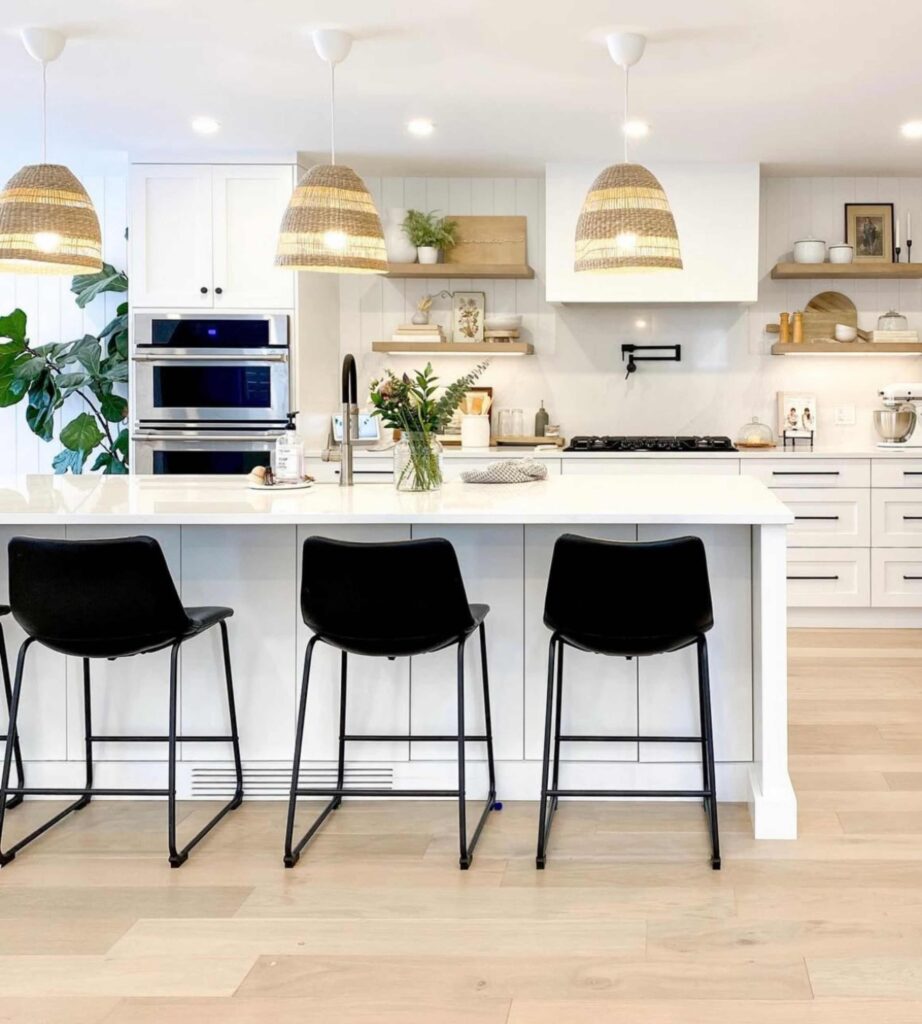
Have you recently moved to a new place and want to get your kitchen set up so it actually works for you? Or maybe you have been living in your home for a while, and your kitchen’s just not flowing with your daily routine anymore. Either way, figuring out where things should go in your kitchen is more strategic than most people realize.
Knowing where to put things in your kitchen cabinets and drawers is not about buying organizers or reorganizing over and over again. It is about thinking through how you actually use your kitchen on a daily basis and setting up zones that support those routines.
Let’s be honest, figuring out where everything should go in your kitchen can feel very overwhelming. There is so much stuff that comes with a kitchen, and it is easy to shove things into the nearest cabinet just to get them out of the way. But that approach usually leads to frustration later when nothing is easy to find.
Your kitchen is basically the headquarters of your home. When it runs smoothly, cooking, cleanup, and even your morning routine feel less stressful. When it does not, it can throw off your whole day.
Now, let’s dive into where to put things in kitchen cabinets and drawers so your kitchen works better for your everyday routine.
STEP 1: THINK OF YOUR KITCHEN SETUP
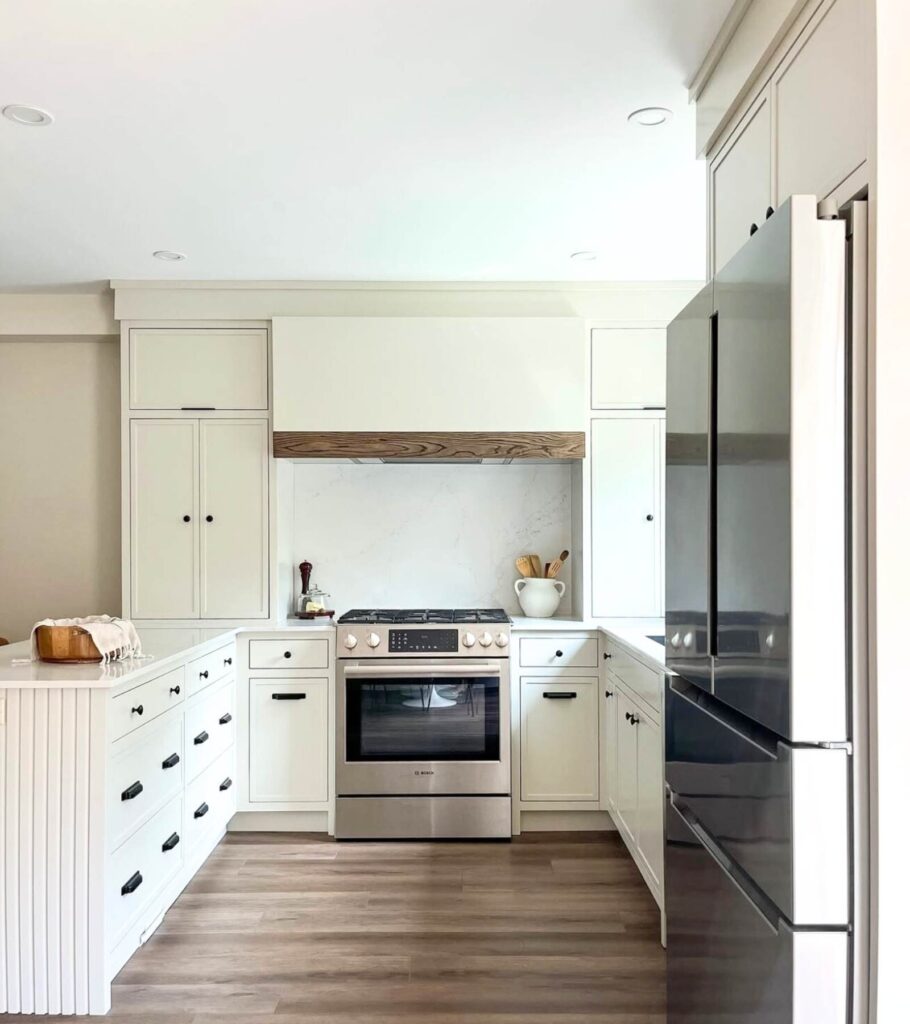
Start by looking at how your kitchen is laid out. Every kitchen is different, but most have a few key areas, like the stove, the sink, the prep counter, and the dishwasher. These are what we call work zones, and they are the areas where you spend the most time.
Thinking about your kitchen in work zones makes deciding where things go so much easier. Instead of overthinking every cabinet and drawer, you can focus on what makes sense for how you actually use your kitchen.
It is important to keep the tools and supplies you use for a specific task close to where that task happens. For example, if you usually chop vegetables near the sink, store your knives and cutting boards nearby.
If you brew your morning coffee in a walk-in pantry or a specific corner of the kitchen, make sure your coffee maker, mugs, and supplies are set up right there. This reduces the number of steps you take and makes everyday routines more efficient.
Take some time to really look at your kitchen’s layout and think about how you move through it on a daily basis. Where do you typically prep food, cook meals, clean up, or make drinks? Pay attention to the cabinets and drawers closest to each of those areas, because that is the storage you want to use.
Now let’s get into the seven most common kitchen zones and walk you through where to put things in your kitchen cabinets and drawers.
STEP 2: GROUP YOUR KITCHEN BY ZONES
The concept of kitchen zones might sound a little extra, but it will make a huge difference in how smoothly your kitchen functions. Instead of thinking about cabinets and drawers one by one, you start thinking about what actually happens in your kitchen.
Every kitchen has areas that serve a purpose. There is a place where food gets prepped, a place where cooking happens, a place for cleaning, and areas for storing food, dishes, and drinks. Kitchen zones are simply a way to group items based on the task they are used for.
When things are grouped by function and stored near where you use them, everything feels easier. Cooking feels less chaotic, cleanup feels faster, and you are not constantly walking back and forth across the kitchen looking for things. I’ll be honest, if my kitchen was not set up this way, I would be digging through drawers and cabinets every time I tried to cook.
Below are the seven most common kitchen work zones. These zones will help you decide where things belong in your cabinets and drawers based on how you actually use your kitchen.
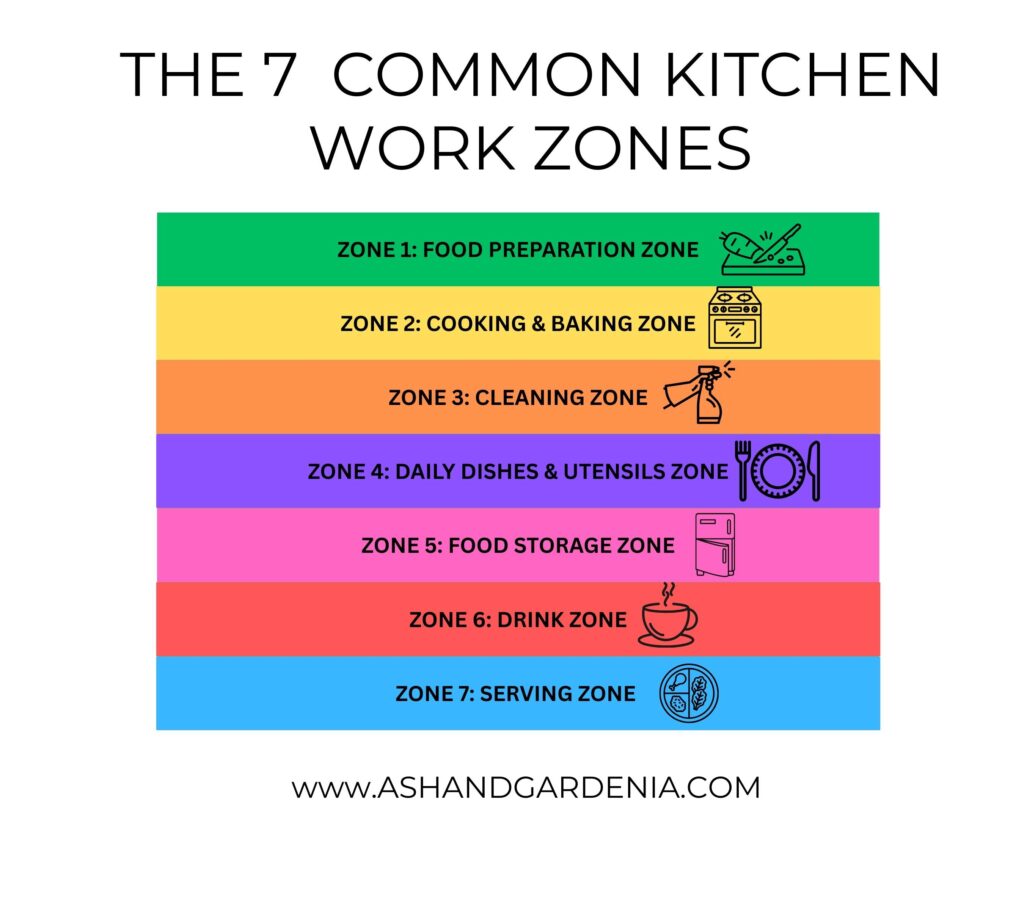
HOW TO STORE THINGS IN CABINETS AND DRAWERS BY ZONES
Zone 1: Food Prep Zone
This is the area where most of your chopping, slicing, and mixing happens, so it should be set up near your main prep counter (and usually close to the sink). The goal is simple: anything you use while prepping food should live right here.
Cutting boards, knives, mixing bowls, measuring cups, and everyday spices all belong in cabinets or drawers near this zone so you’re not running back and forth while cooking
Food Prep Drawer Placement
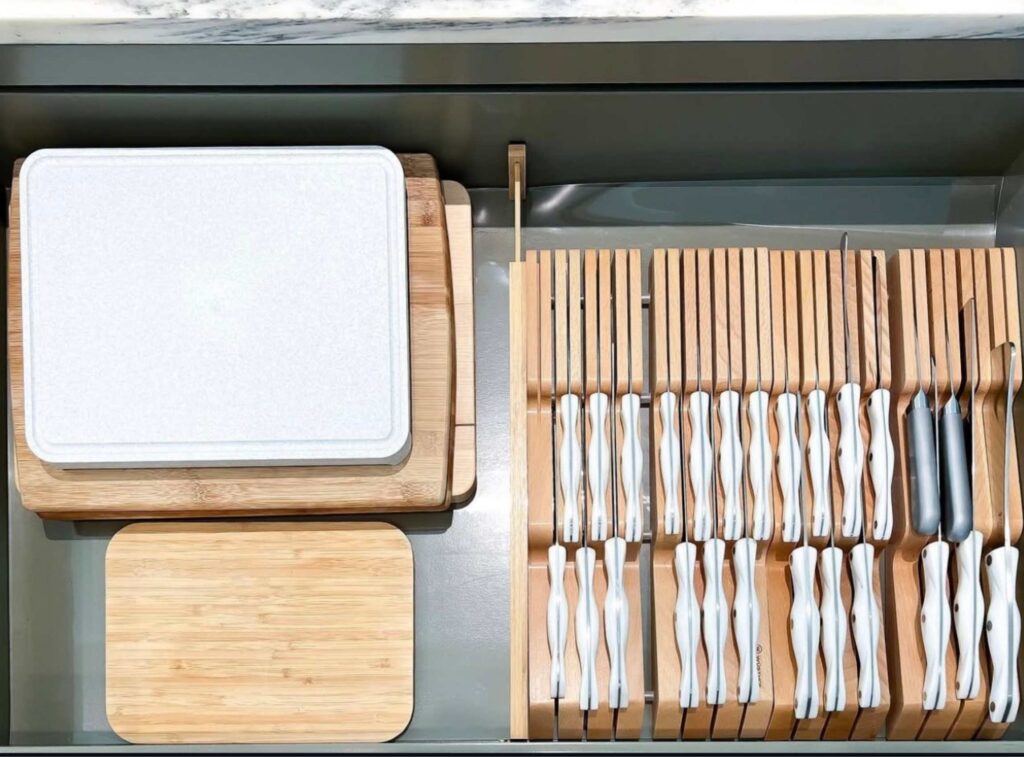
If you have the drawer space near your prep counter, this is the best place to keep your food prep tools. Storing them here keeps your counters clear and makes cooking feel easier and more efficient.
Knives can go in a drawer insert or stay in a countertop block if that’s what you prefer. This drawer is perfect for knives, cutting boards, peelers, measuring spoons, and other tools you reach for while prepping meals.

FOOD PREP SUPPLY CABINET
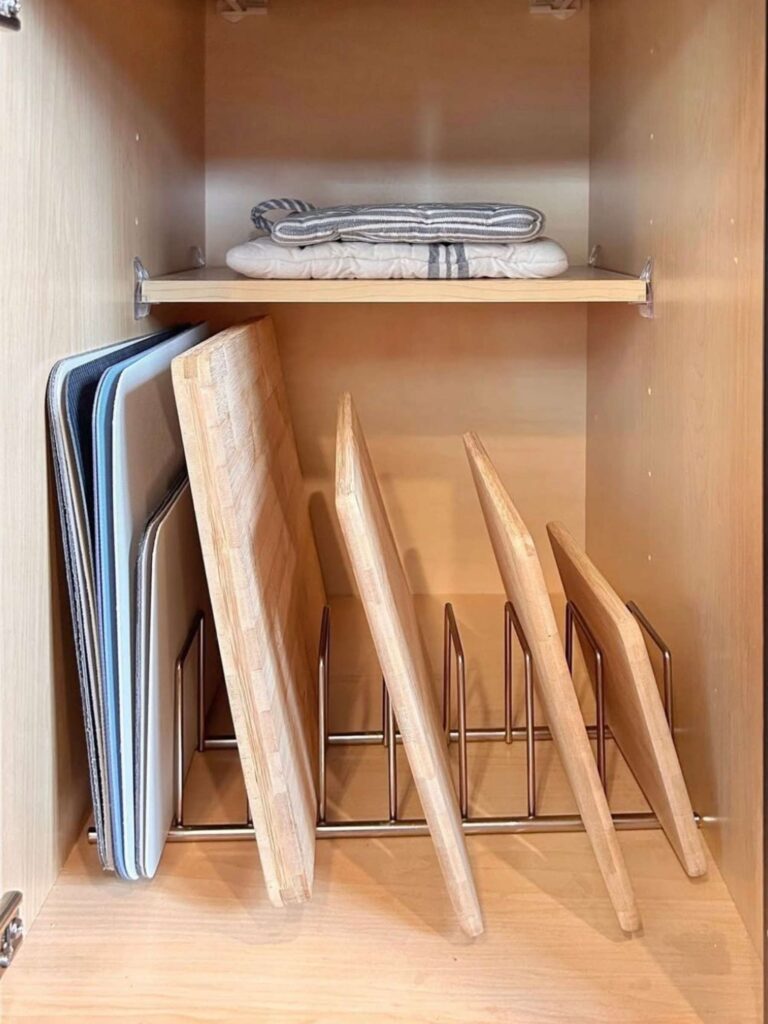
If you have the space, this is a great place to keep your food prep essentials together. Store items you reach for during prep, like cutting boards, mixing bowls, colanders, salad spinners, and meal prep containers, in one easy-to-access spot near your prep area.
Instead of stacking cutting boards and trays, I recommend using a vertical cutting board rack. It keeps everything upright, easy to grab, and way less annoying to put back.
ZONE 2: Cooking & Baking Zone
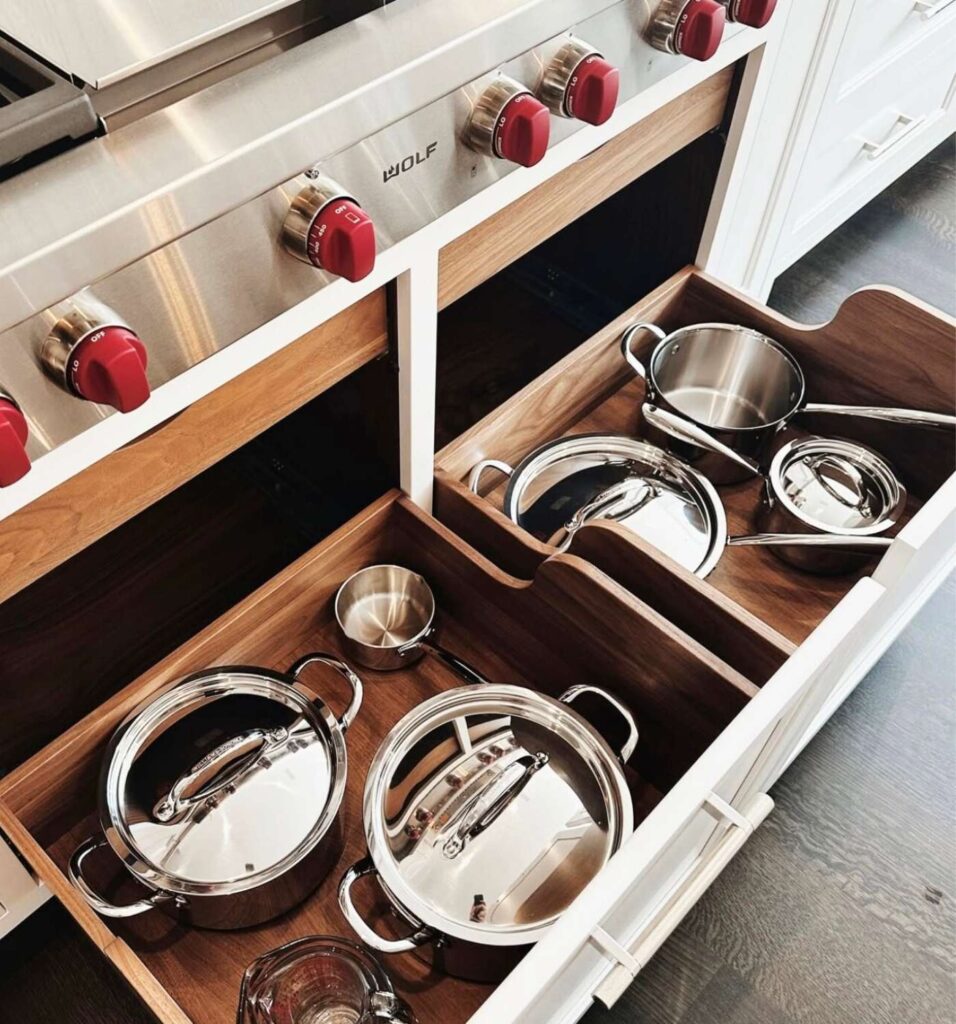
This zone is built around the stove, oven, and sometimes even the microwave—it’s where the heat happens, quite literally. Deciding where to put things in kitchen cabinets and drawers in this area can be tricky, especially if you’re short on space. Keep pots, pans, lids, cooking utensils, baking supplies, oven mitts, and everyday seasonings close to the stove so everything you need is within reach while cooking.
Being mid-recipe and realizing the oil or pan you want is on the other side of the kitchen is frustrating, so this zone should support how you actually cook.
POTS AND PANS Drawer Placement
I personally love storing pots, pans, and lids right by the stove. If you have deep pull-out drawers near the stove, use them. It makes grabbing what you need feel effortless, and you’re not bending, digging, or moving around the kitchen while something’s cooking.
For me, being able to see everything at once makes cooking feel calmer and more efficient. I know exactly where things are, and I’m not breaking my flow trying to find the right pan.
Pots and Pans in Cabinet
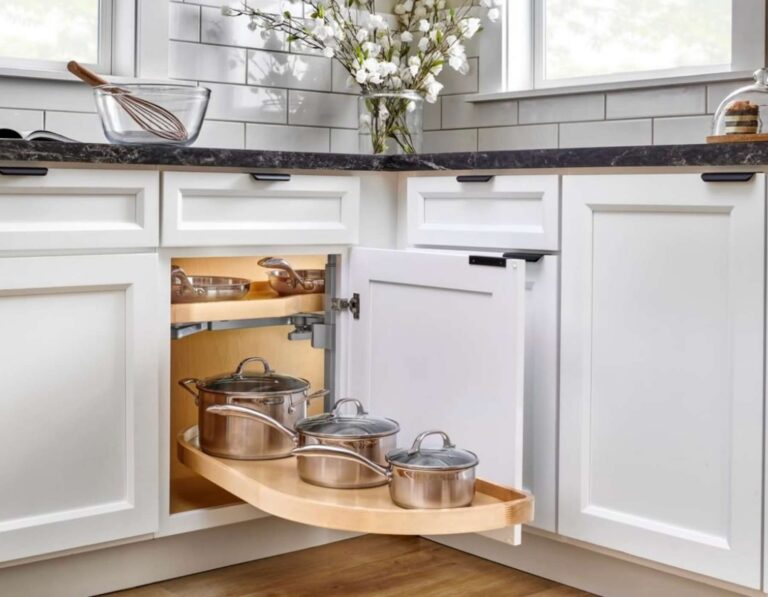
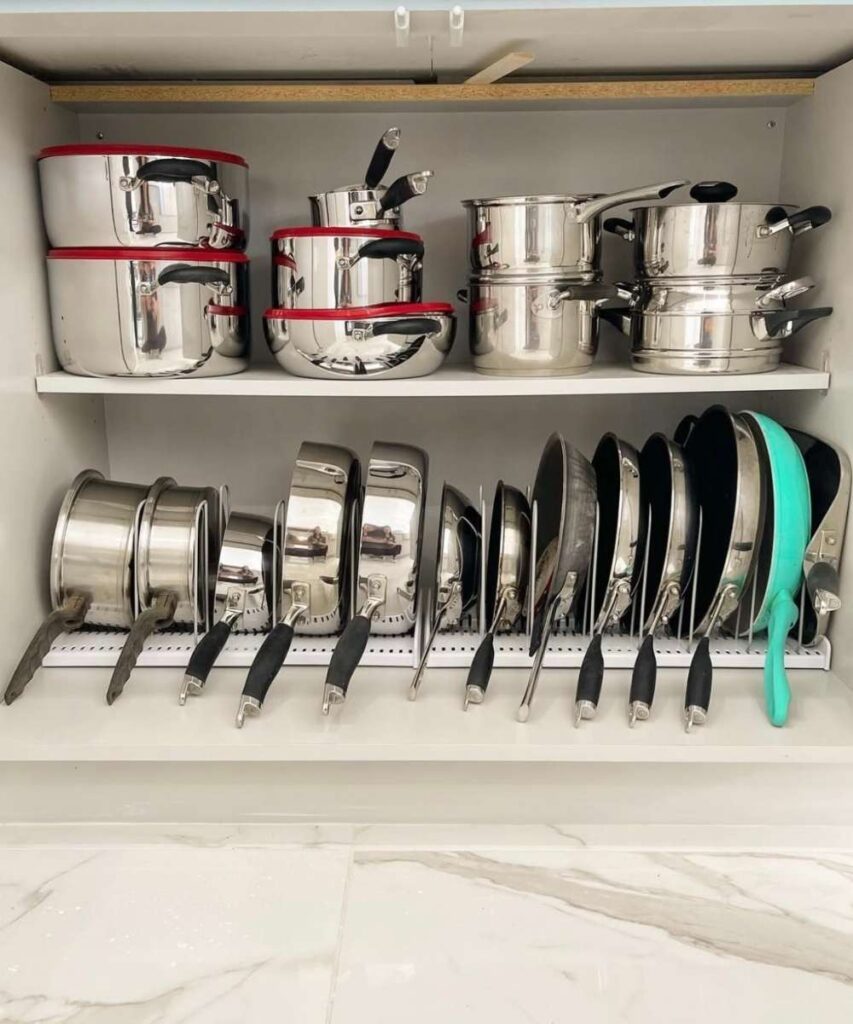
If drawers are not an option, storing pots and pans in a large cabinet or split between two small cabinets also works well. Place this cabinet as close to the stove as possible so everything you require is right there.
I personally recommend using a pots and pans organizer inside the cabinet. It keeps cookware separated so you’re not lifting a heavy stack; you’re just grabbing one at a time. I use one at home for my pans and smaller pots, and honestly, it’s a game changer. I can slide out exactly what I need without banging everything around, and it also makes better use of the cabinet space.
If you’re short on drawer space or just need more ideas, I put together 18 Space-Saving Pots and Pans Storage Ideas You’ll Love with many ideas to organize those bulky pots and pans.

COOKING UTENSILS DRAWER
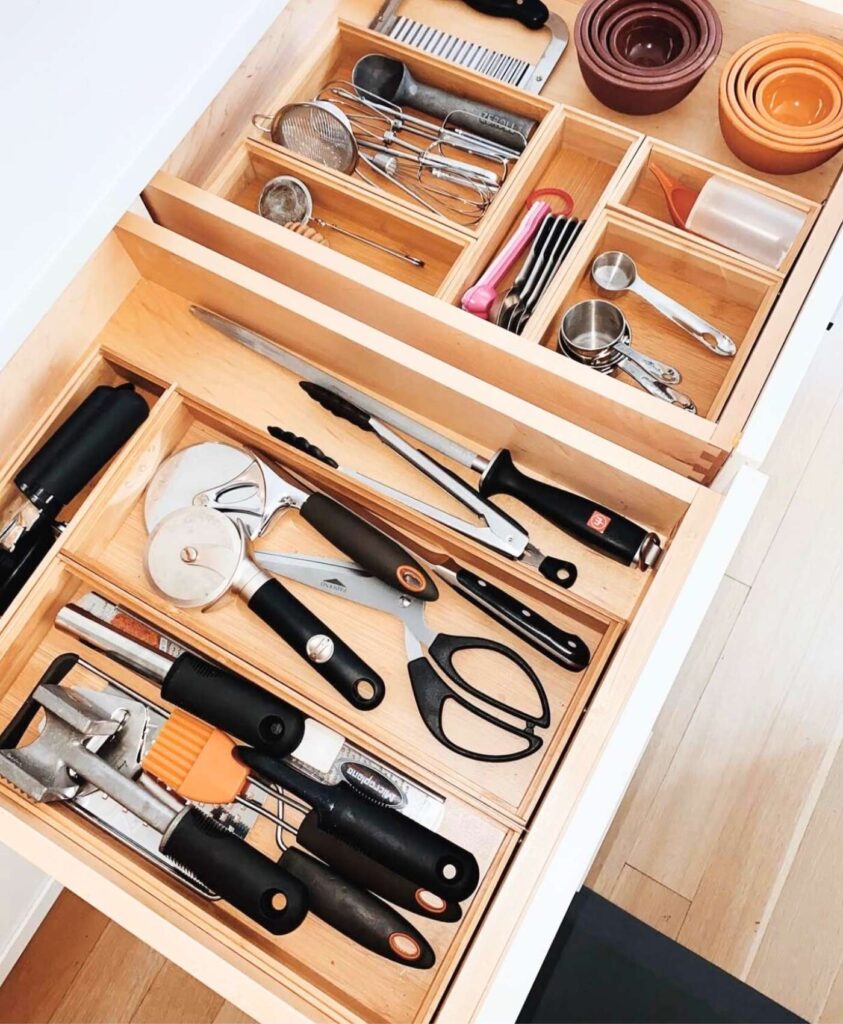
A dedicated cooking utensils drawer or utensil holder near the stove is a must. Spatulas, tongs, and wooden spoons are tools you reach for constantly, so keeping them close just makes sense.
I like to use drawer dividers or trays to keep all cooking utensils separated by category. Otherwise, it turns into a jumbled mess. When everything is easy to find, cooking feels way more enjoyable and a lot less like a scavenger hunt.

SPICE DRAWER Placement
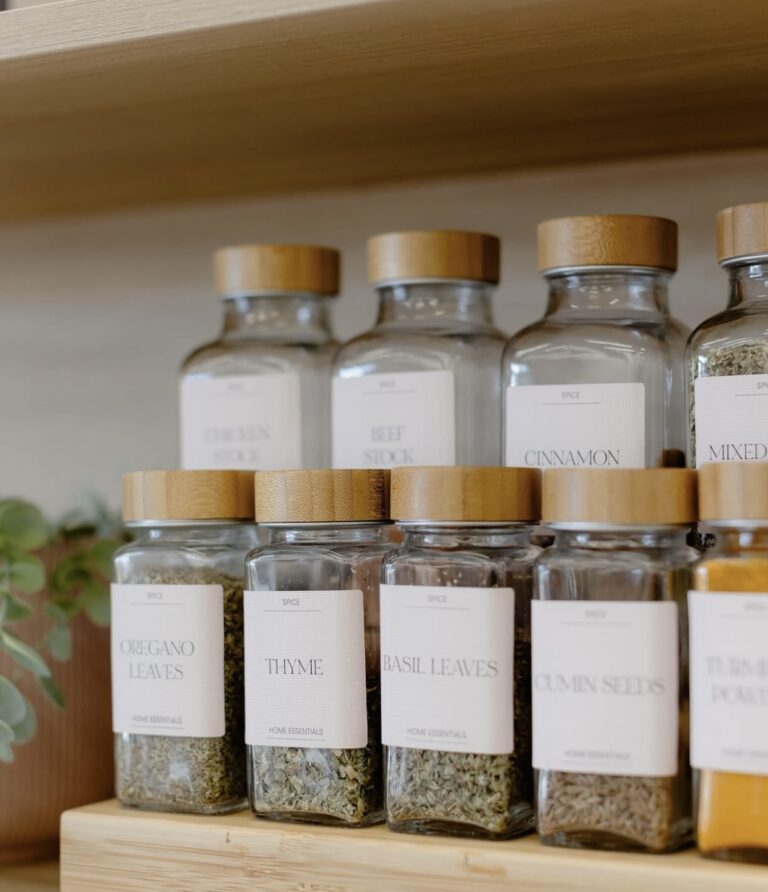
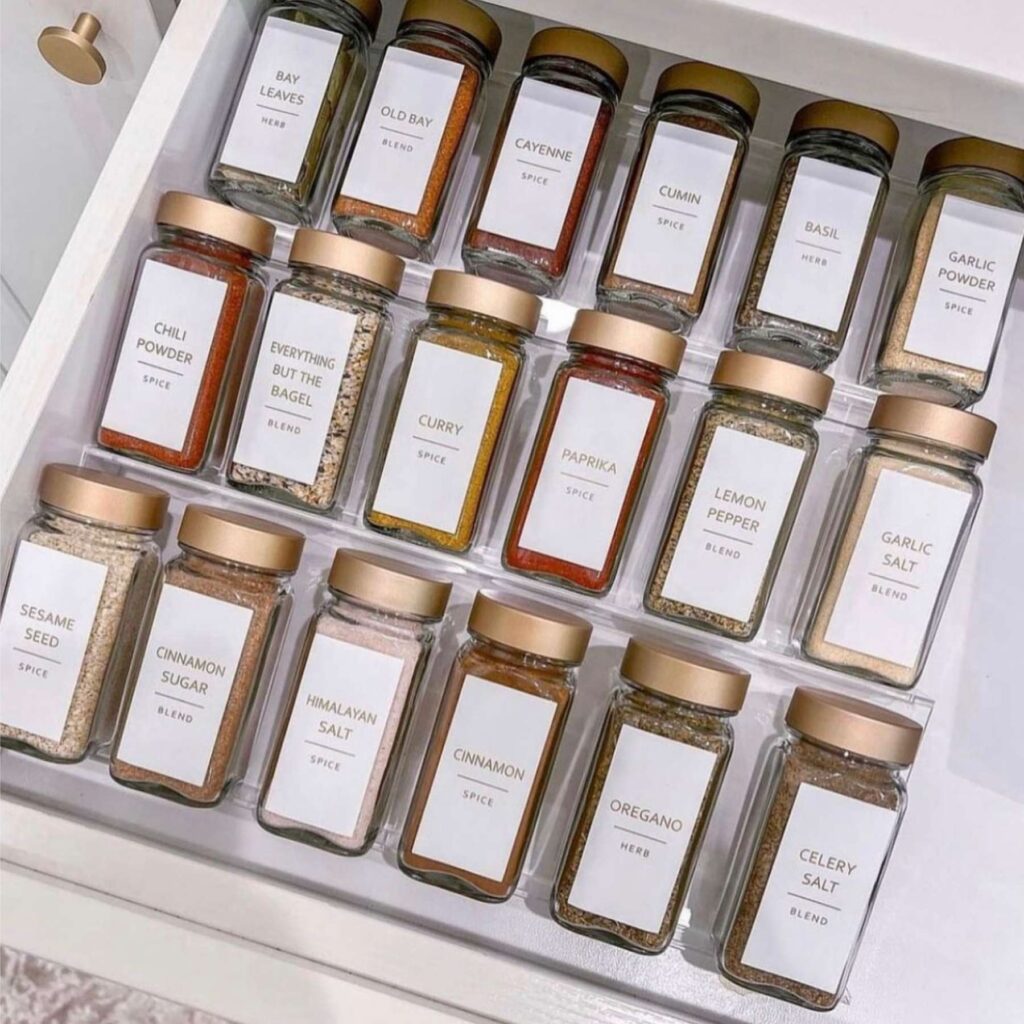
Digging through spices in the middle of cooking is the worst. That’s why I’m a big fan of keeping spices neatly organized in a spice drawer or cabinet close to the stove or main food prep area.
When spices are nearby, cooking feels smoother and less interrupted. I personally love a spice drawer because I can see everything at once and grab what I need without stopping my flow. Having them all in one place near where you cook just makes everyday meals easier.
If you want inspiration for spice setups, I share more ideas in my post, 30 Kitchen Spice Ideas You’ll Love.

BAKING CABINET Placement
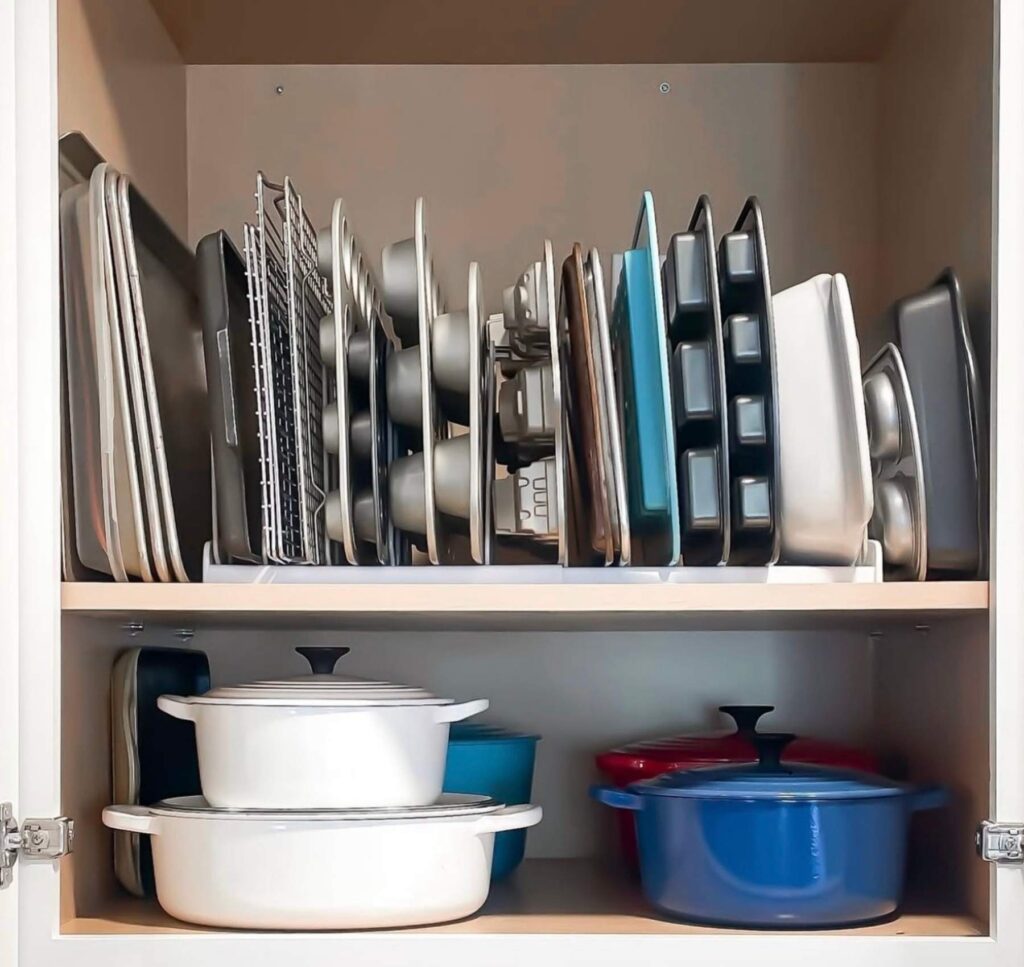
A dedicated cabinet for your baking sheets, muffin tins, and other baking essentials is a total game changer for anyone who loves to bake. Instead of digging through overcrowded shelves or mixing your baking pans with everyday cookware, you can neatly store all your baking tools in one easy-to-reach spot.
Ideally, this cabinet should be located near your oven or main prep area so everything you need for baking is within reach. Placing these items near the fridge or dishwasher doesn’t really support how baking actually happens, so keep them close to where you use them.
BAKING DRAWER Placement
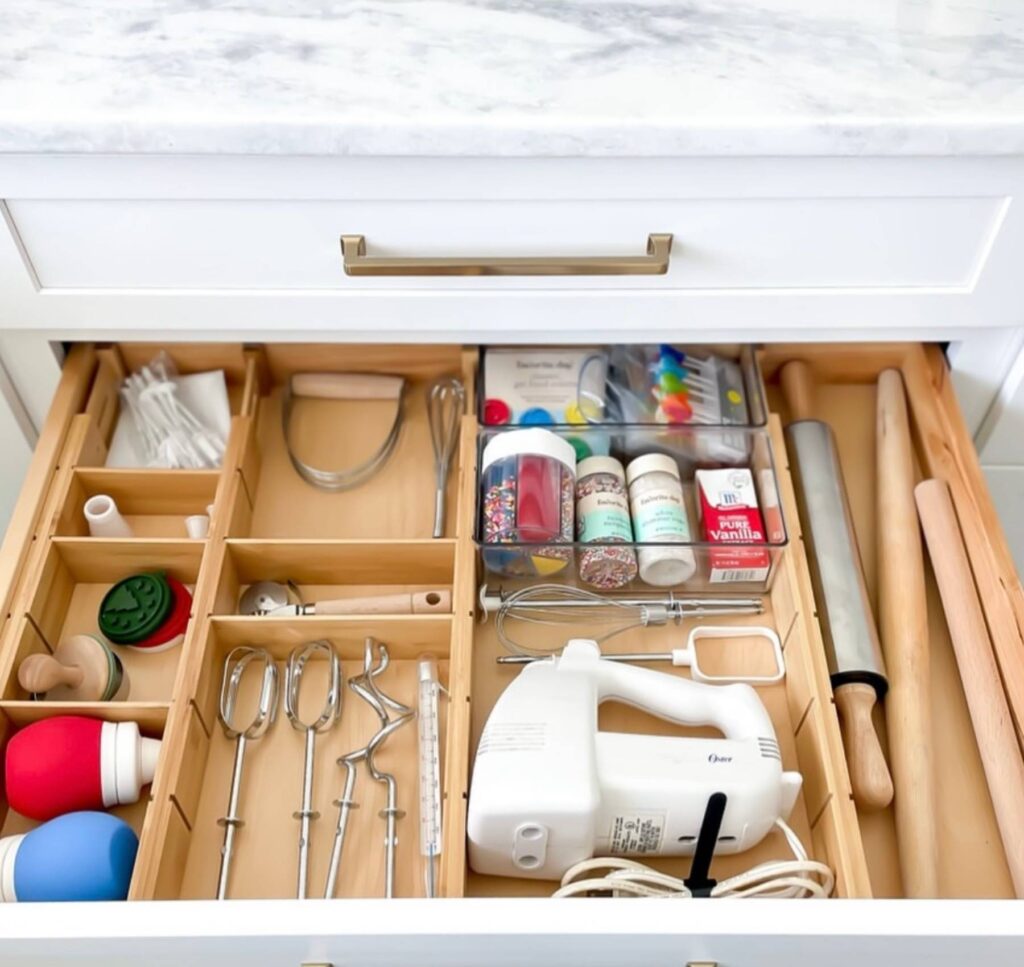
If you have the drawer space, creating a dedicated baking drawer is a smart way to organize all your smaller baking essentials in one easy-to-reach spot. This drawer works best near your prep area or oven, especially if you bake often.
You can store tools like measuring spoons, whisks, cookie cutters, rolling pins, cupcake liners, piping tips, and extra parchment paper. I love having everything in one drawer because it makes baking feel smoother and keeps me from searching in other areas of the kitchen for items.
ZONE 3. CLEANING ZONE
Nobody loves cleaning up, but having a well-thought-out cleaning zone definitely makes it way less of a hassle. This area should be centered around your sink, since that is where most of the dishwashing and post cooking cleanup happens.
Ideally, your dishwasher, if you have one, trash and recycling bins, and drying rack should all be close by. Keep dish soap, sponges, and everyday cleaning supplies in this zone as well, so you’re not scrambling when there’s a mess to deal with.
CABINET UNDER THE SINK Placement
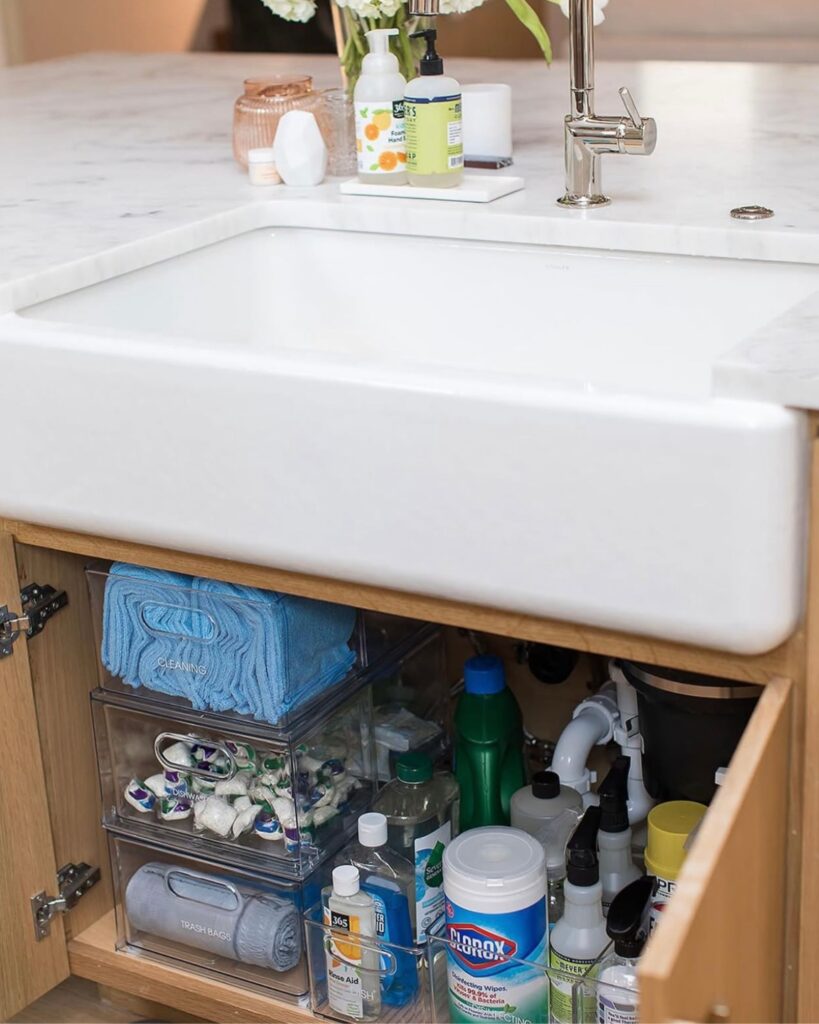
The cabinet under your kitchen sink is the most practical place to store dish soap, garbage bags, sponges, dishwasher pods, and general cleaning sprays. When deciding where to put things in kitchen cabinets and drawers, keeping cleaning supplies contained in this area just makes everyday cleanup easier.
I highly recommend using organizers under the sink. Clear acrylic bins work wonders because they keep all your products visible and contained so nothing gets lost in the back (because let’s face it, that’s where cleaning products go to disappear). I use a two-tier organizer under my sink, and it entirely changed how the space functions. No more knocking over bottles every time I grab a sponge.
If staying on top of kitchen messes feels overwhelming, especially on busy days, you’ll love my post 24 Ways to Keep a Kitchen Clean When Life Gets Messy.

LINENS DRAWER Placement
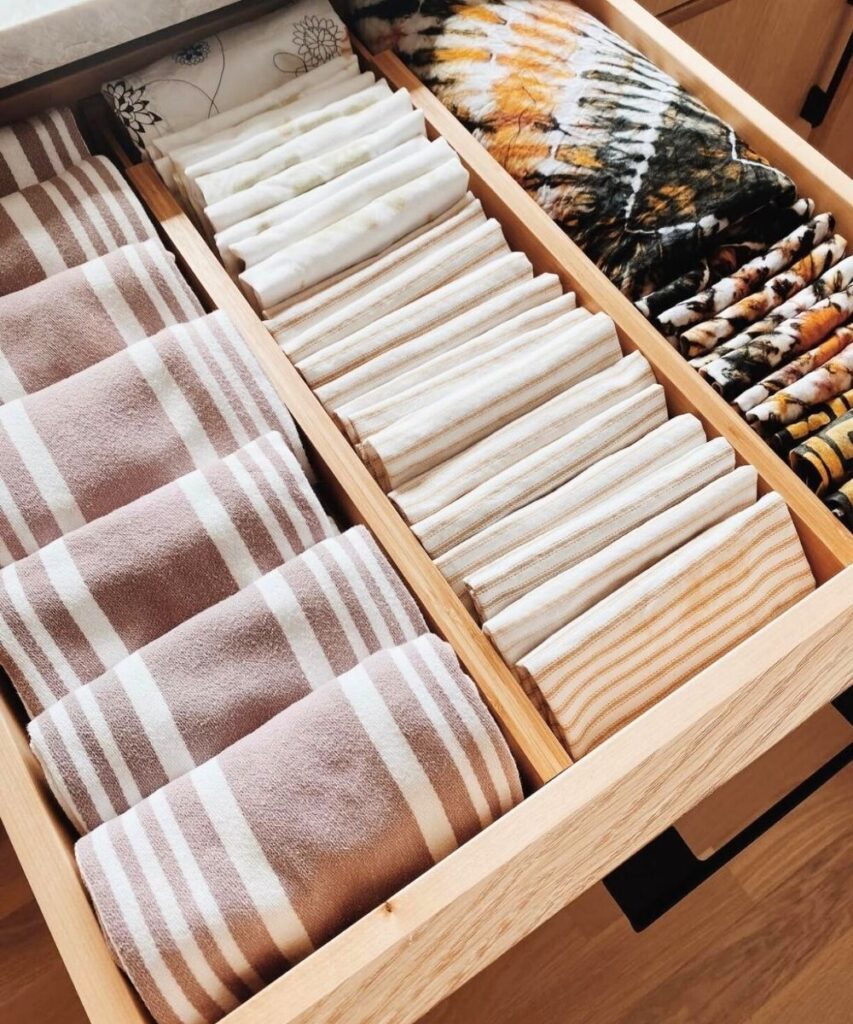
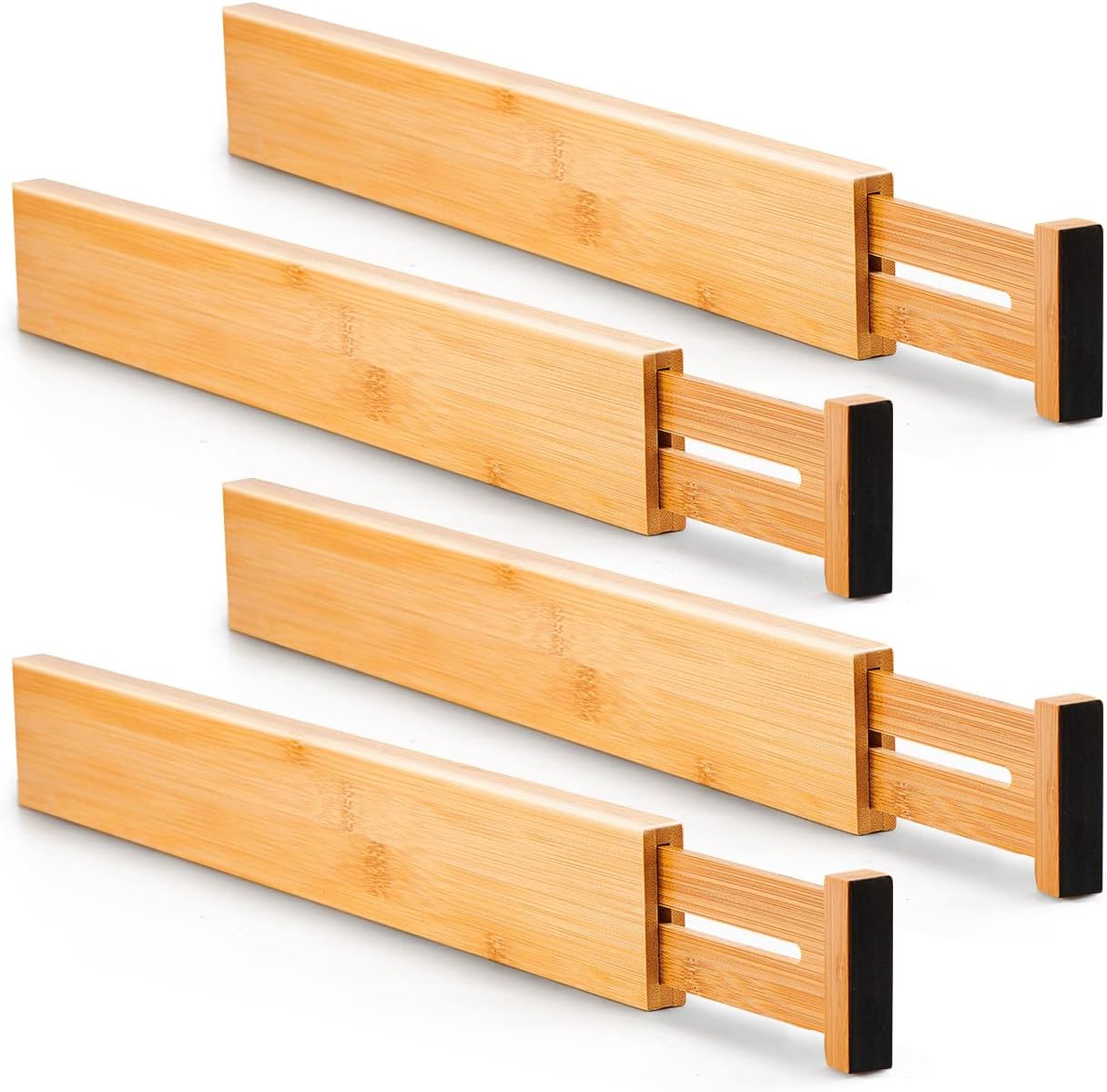
You’ll want to keep all your dish towels and other kitchen linens in one organized spot. I like to dedicate one drawer just for linens, preferably near the sink or prep area, so they are easy to grab when you need to dry a dish, wipe down a counter, or dry your hands.
Fold them neatly or use drawer dividers if you want to get fancy. This will make a big difference in keeping things tidy.
ZONE 4: DAILY DISHES AND UTENSILS
Having your everyday plates, cups, and utensils scattered all over the kitchen is a recipe for frustration. This zone works best when it’s set up near the dishwasher or sink, making unloading and putting things away much easier.
When everything is stored together, setting the table or grabbing what you need for a quick meal feels effortless. Figuring out where to put things in kitchen cabinets and drawers in this zone is fairly straightforward and makes a noticeable difference in how your kitchen functions day to day.
PLATE Placement
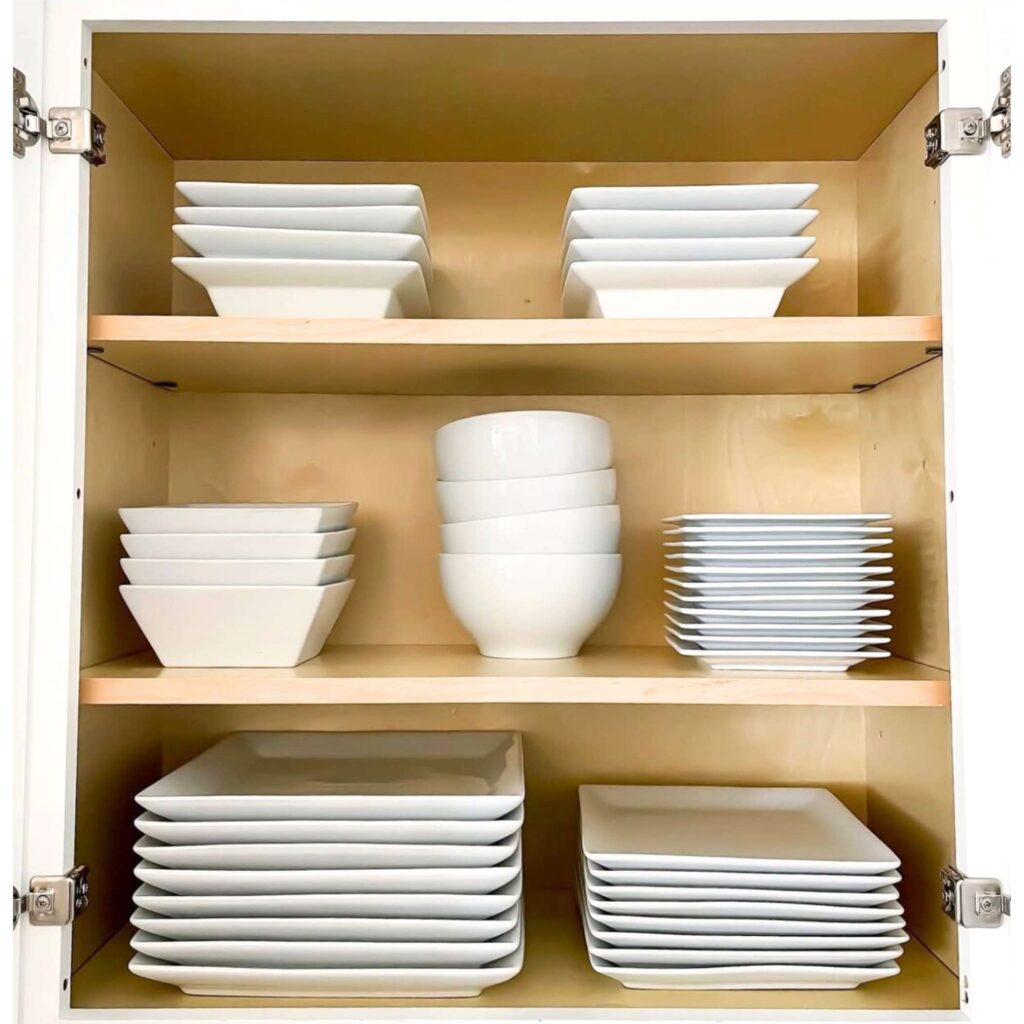
I like to keep plates stacked in an upper cabinet, close to where cups and utensils are stored. I’m personally not a fan of bending down to grab plates. It feels like an unnecessary hassle and, honestly, not great after a tough workout day.
Keeping plates up top makes everyday use easier for me. That said, if you have deep pull-out drawers with built-in plate organizers, that can be a great option too. It really comes down to what feels most comfortable and convenient in your space.
Drinkware Placement
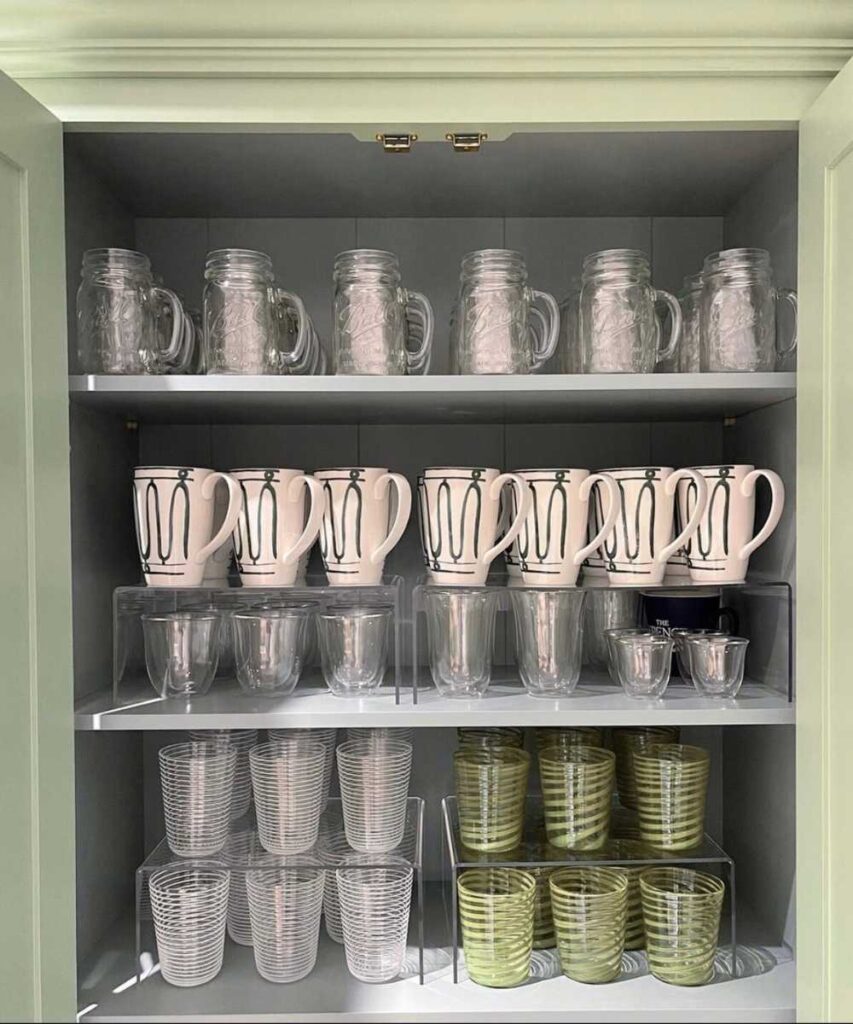
Store your cups in an upper cabinet near your plates and utensils so they’re easy to grab throughout the day. Drinkware also looks great on open shelving or behind glass cabinet doors if you have them.
I personally keep mine in an upper cabinet grouped by type. Glass cups on one shelf, mason jars on another, and wine glasses on the top shelf. If you’re tight on space, it’s completely fine to store plates and cups together in the same upper cabinet. Cabinet risers can help you make better use of vertical shelf space and fit everything without overcrowding.

UTENSIL Drawer Placement
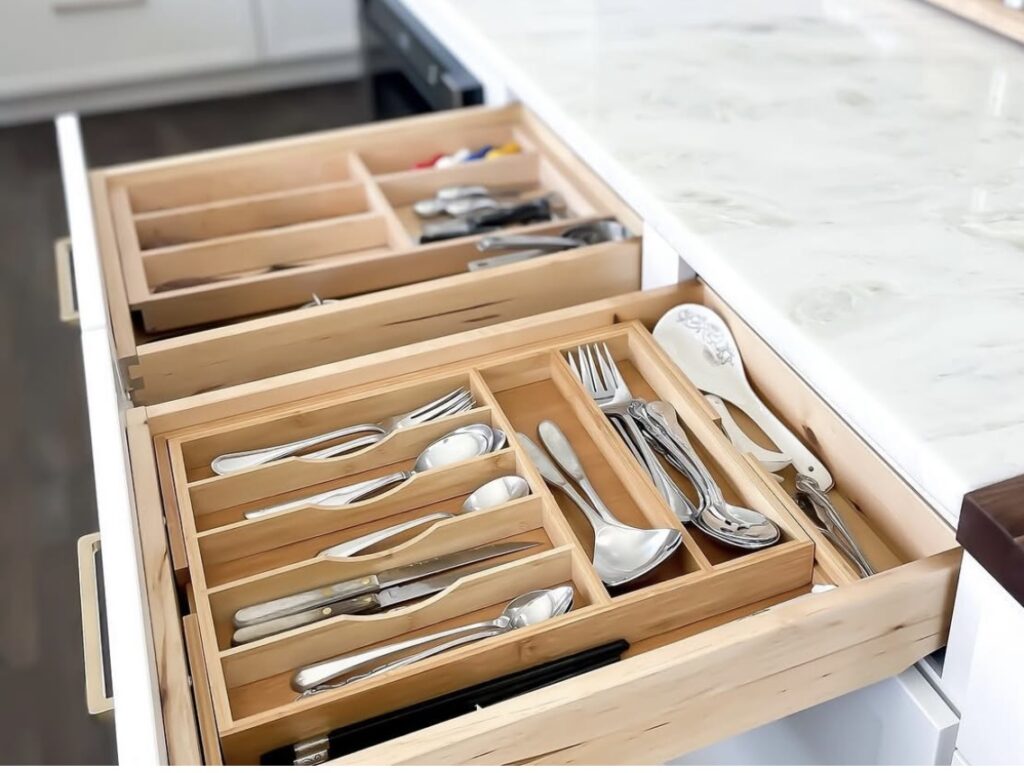
Utensils are items you use constantly, so their placement really matters. I recommend storing everyday forks, knives, and spoons in a drawer close to the dishwasher or drying area. This makes unloading quick and painless, which is something you’ll appreciate daily.
I personally like using a utensil tray in this drawer so everything stays in one place and is easy to grab. When silverware has a clear place, you’re not digging around just to set the table or make a quick meal.
ZONE 5: FOOD STORAGE ZONE
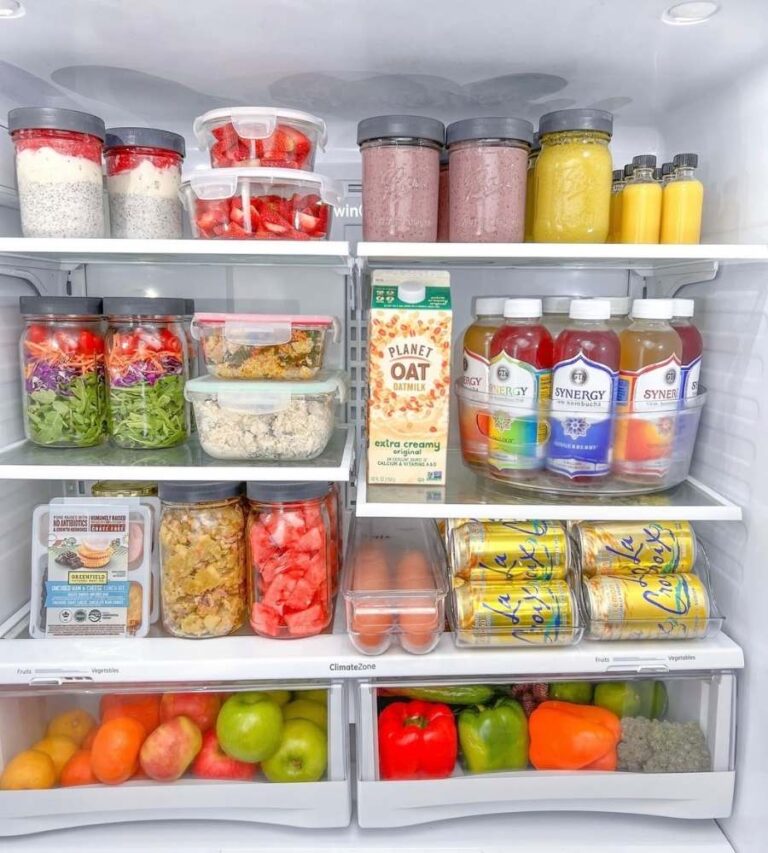
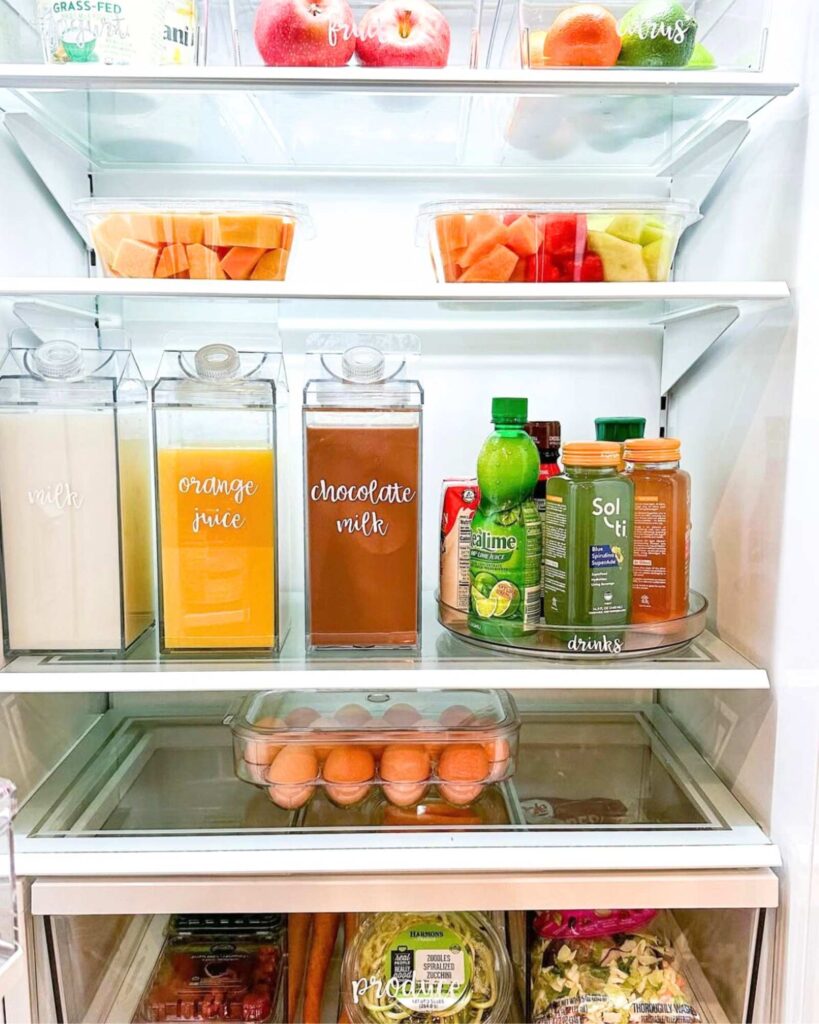
This zone holds all your food, including fresh, frozen, canned, and dry items. It includes your fridge, freezer, pantry, and any cabinets where you store meal staples, snacks, and other dry food items.
When planning where to put things in kitchen cabinets and drawers for this zone, placement is key. Keeping frequently used pantry items close to your prep area makes cooking and meal planning much smoother and cuts down on unnecessary back-and-forth across the kitchen.
Cabinet Pantry Placement
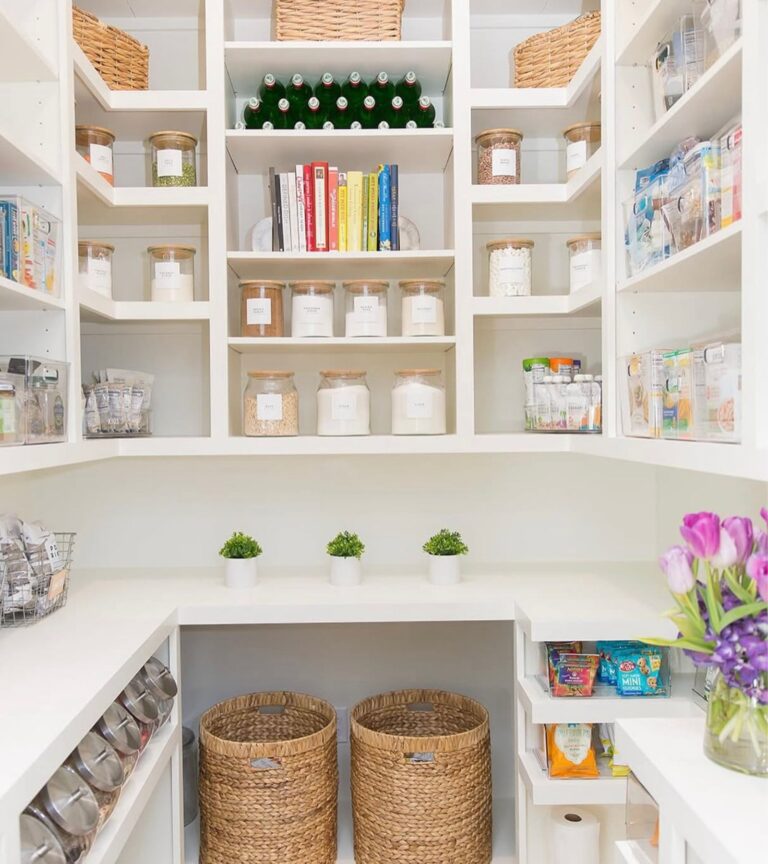
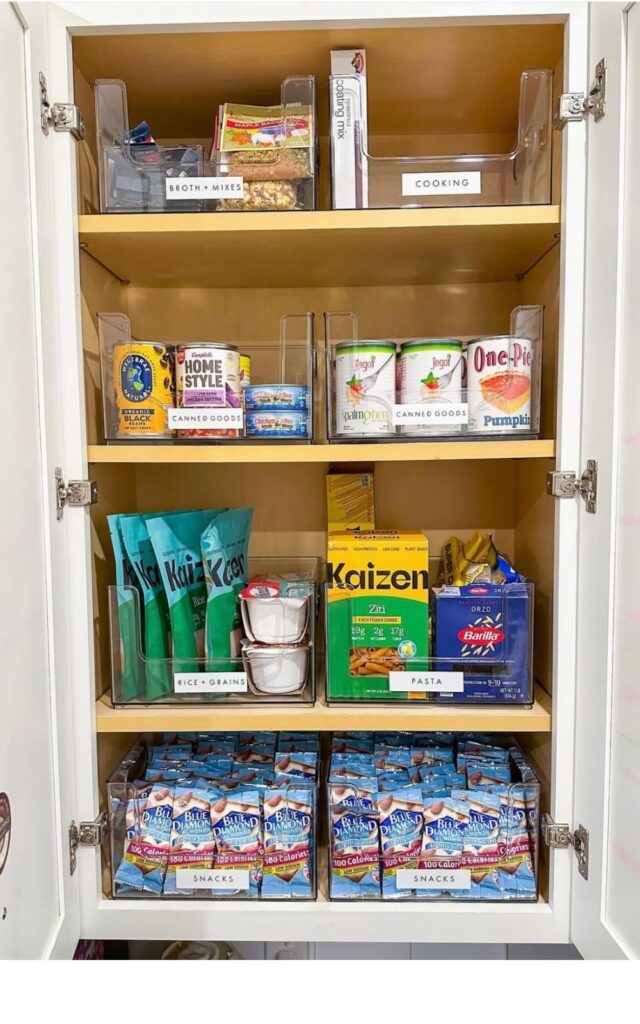
A cabinet pantry works best when it’s positioned near your main prep space. This makes it easy to grab ingredients while cooking without interrupting your flow.
I like categorizing items in the pantry by type of food, such as snacks, carbs, and breakfast items. If you want a step-by-step system for grouping and categorizing pantry items, read How to Declutter and Organize Your Pantry Using Pantry Categories. Using bins or lazy Susans helps keep everything easy to grab and prevents items from getting lost in the back. I’ve found that clear containers or labeled baskets make a big difference because you can see exactly what you have at a glance.
If you’re looking for more pantry layout and storage inspiration, you’ll love my post, 30 Brilliant Kitchen Pantry Organizing Ideas for Every Home.
ZONE 6: THE DRINK ZONE
The drink zone is one of my favorite parts of the kitchen. It’s where all the fun and caffeine live. This area is set up to prepare, store, and serve beverages, whether that’s your morning coffee, afternoon smoothie, tea, or even an energy drink.
This zone usually includes your go-to appliances like a coffee maker, electric kettle, blender, mini fridge, or wine cooler if you have the space. Keeping everything related to drinks in one spot makes your daily routine feel smoother, especially on busy days.
DRINK ZONE CABINET AND DRAWER STORAGE
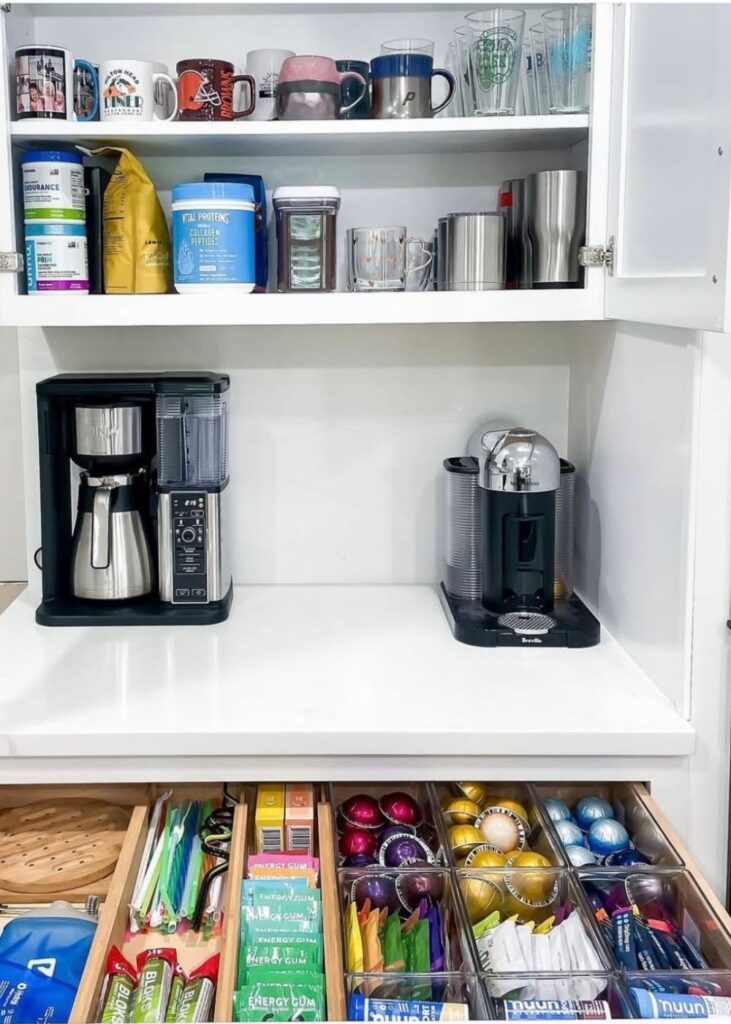
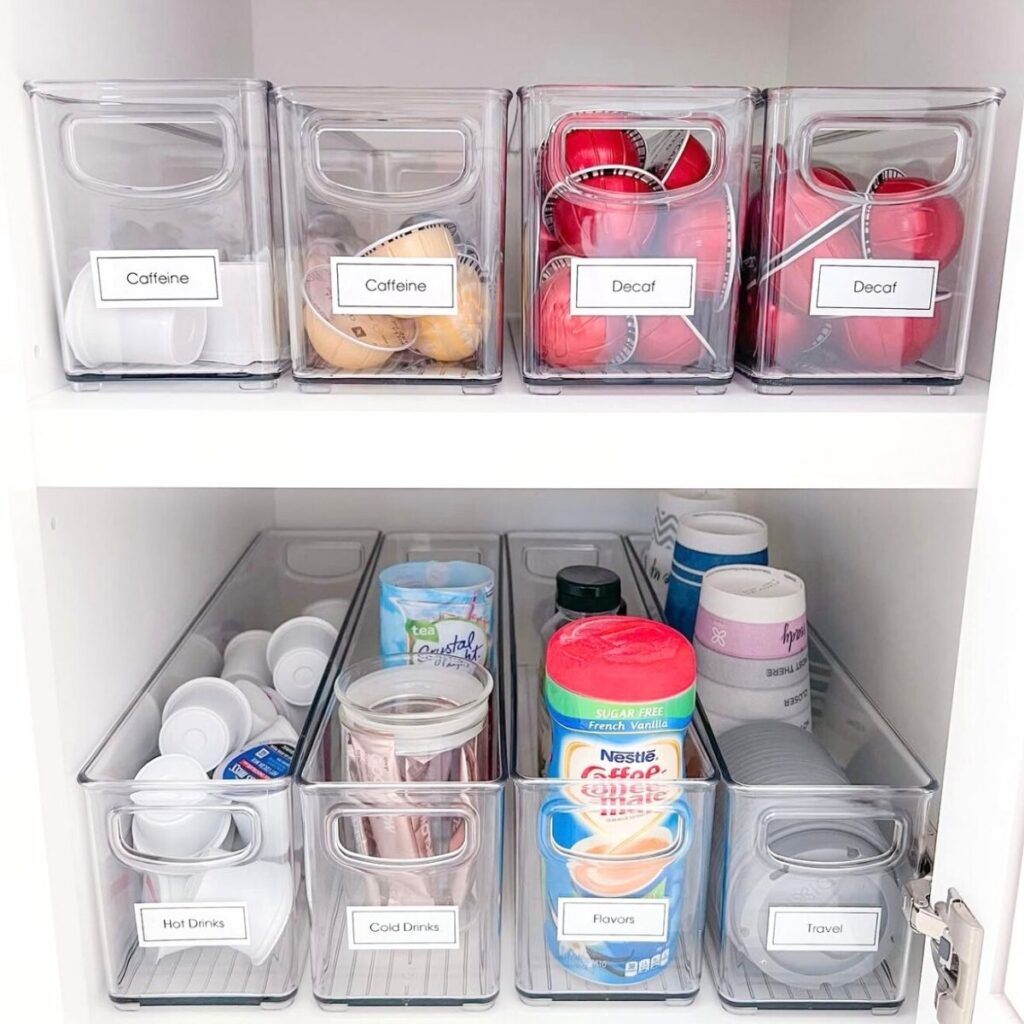
To keep things functional, store your mugs, glasses, and drink supplies in nearby cabinets and drawers. I like keeping coffee mugs on an easy-to-reach shelf and using a drawer for tea bags, coffee pods, sweeteners, or other daily drink essentials.
DRINK CABINET STORAGE
You can also store your drink supplies in one kitchen cabinet. Clear containers work great for separating different items like tea bags, coffee pods, and to-go cups. Everyday mugs and drinking glasses can be stored in the same cabinet so everything you need for drinks is kept together and easy to access.
ZONE 7: SERVING ZONE
The serving zone is where food is plated, meals are transferred into meal prep containers, lunches are packed, and leftovers are stored. Ideally, this zone is located between the cooking area and the dining space to make serving and cleanup easier. It typically includes a spacious countertop that allows you to work comfortably.
This zone typically holds items like serving dishes, trays, serving utensils, and napkins, making it easy to transition from cooking to mealtime. When deciding where to put things in kitchen cabinets and drawers, keep the items you use most for serving stored close to this zone so you can move seamlessly from cooking to mealtime.
MEAL PREP CONTAINERS
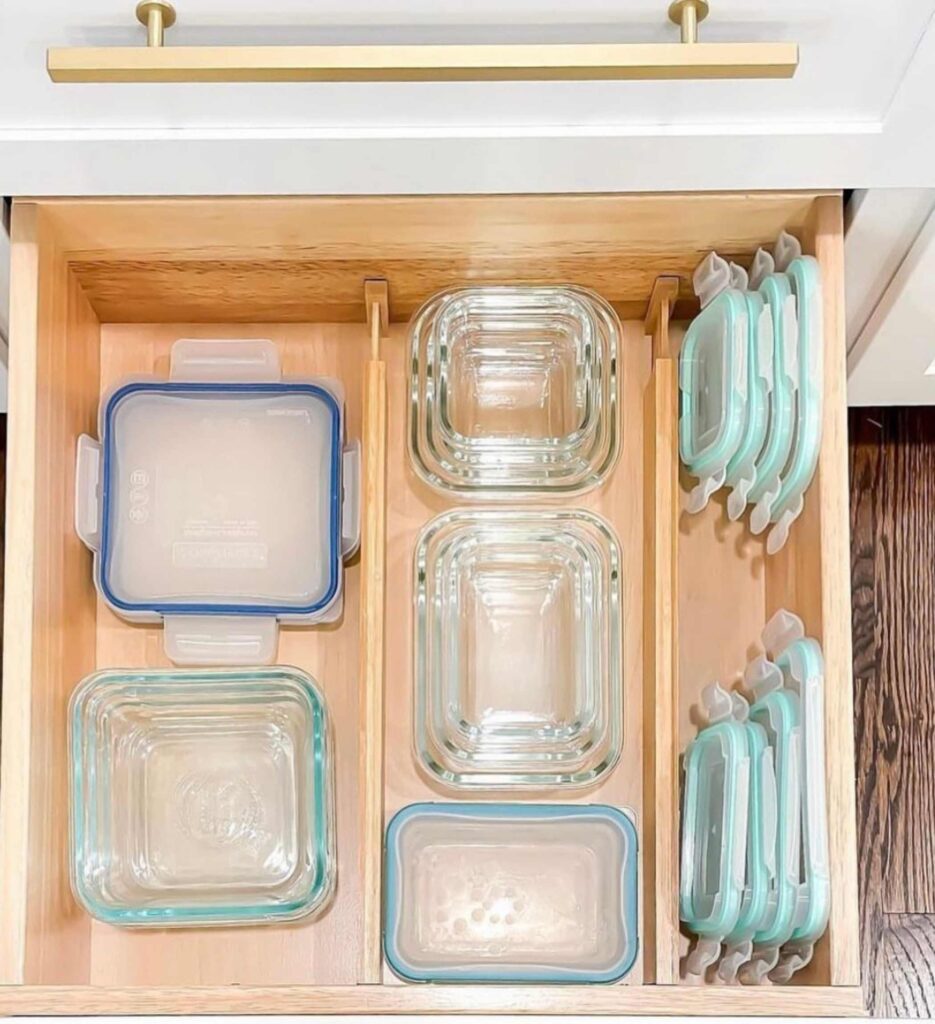
If you meal prep like me or save leftovers often, having a dedicated spot for your meal prep containers is essential. Rather than dealing with mismatched containers and loose lids, store everything together in one drawer. Dividers or bins help separate containers by size and keep lids organized, making meal prep quicker and less frustrating.
MEAL PREP BAG DRAWER
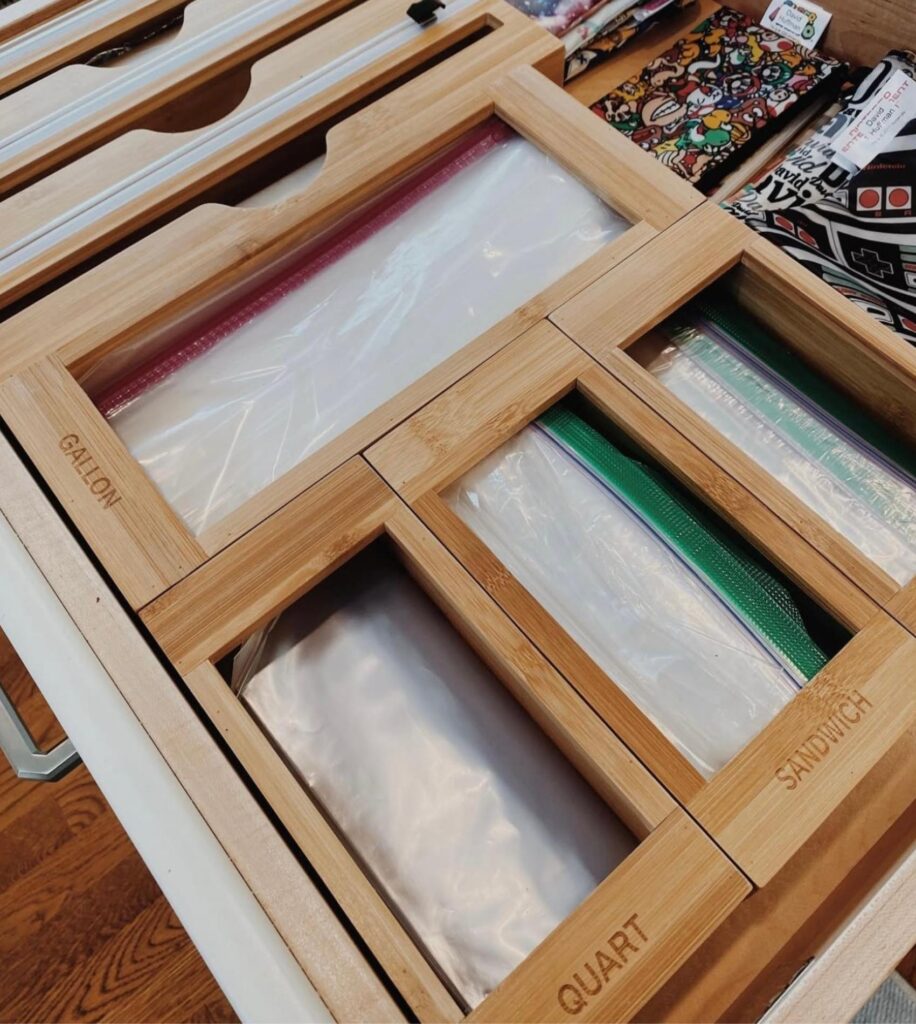
Instead of keeping boxes of sandwich bags, freezer bags, and snack-size bags shoved in a cabinet or cluttering up a pantry shelf, you can store them neatly in a kitchen drawer. With an organizer or bag dispensers, everything stays in one place and is super easy to grab when you need it.
I love these plastic baggie dispensers because they keep each size separated and visible. Packing lunches, storing leftovers, or freezing food all become faster and easier when your storage bags are in a convenient spot.

OTHER ZONES
You may have additional items to organize, and creating extra zones for them can help keep your kitchen functional and clutter-free. If space is limited, store these items in drawers, cabinets, or within existing zones where they naturally make the most sense.
Here are a few other kitchen zones you may want to include:
- Small appliances
- Baby needs (formula, bottles, bibs, cups, etc.)
- Vitamins and daily medications
- Paper goods
- Junk drawer
CONCLUSION
Figuring out where to put things in kitchen cabinets and drawers can feel overwhelming. Especially when you’re trying to stay organized and efficient. Organizing your kitchen by work zones can make a huge difference.
When you group items by function, such as storing pots and pans near the stove, keeping knives and cutting boards close to your prep area, and placing all your baking tools together, you create a natural flow that makes cooking faster, easier, and far less stressful. It’s all about making your kitchen work for you, not the other way around.