A Simple Weekly Reset Routine That Prioritizes What Matters
A weekly reset routine is a simple way to reset your home, schedule, and mindset so the week feels calmer and more intentional.

Most people don’t start their week feeling lost and chaotic because Monday is hard. They start it this way because they are carrying the weight of unfinished business from the week before.
Loose ends. Forgotten tasks. Mental notes you meant to write down. Meals you didn’t plan and ended up ordering takeout instead, clutter you didn’t deal with.
By the time your workweek begins, your brain is already juggling more than it should, and the week hasn’t even started yet.
If this sounds familiar, you’re not alone. It used to be me, too. Trying to start the week fresh while carrying last week’s mess with me.
Over time I realized the solution to that mental clutter wasn’t a new planner or app.
It was a weekly reset.
A weekly reset isn’t about being perfectly organized or having your life together. The way social media influencers often make it look. It’s about intentionally closing out the previous week so you can start the next one feeling calm, clear, and energized.
A weekly reset routine helps you let go of what feels urgent and refocus your energy on what truly matters for the upcoming week. That’s why I created the Weekly Reset Ladder—to help you focus on what matters most.
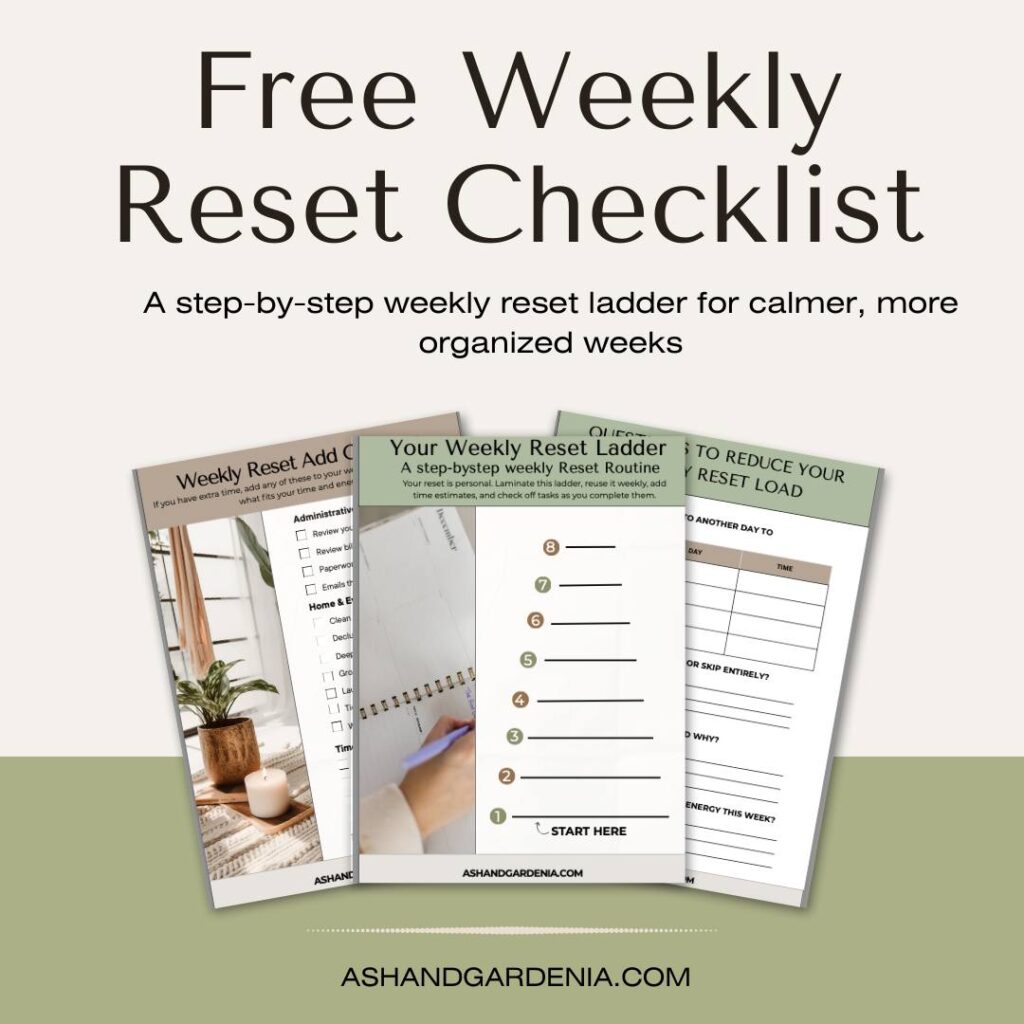
Get Your Free Reset Ladder Checklist Below
Use the same step-by-step reset ladder I use each week to reset your space, plan your time, and reduce overwhelm.
What a Weekly Reset Is and Isn’t
A weekly reset is a dedicated block of time when you close out loose ends from the previous week and then intentionally prepare for the week ahead.
Think of it as pressing a reset button—not a full life audit or total overhaul.
Without a reset, I used to dive headfirst into the week with no direction, unsure of where my energy should actually go. I was busy but not focused, which left me anxious, overwhelmed, and constantly behind. After having my first child, that feeling intensified.
And for my fellow overproductive overachievers:
A weekly reset is not an all-day productivity marathon.
It’s not about deep-cleaning your house or planning every minute of your schedule.
Those projects belong to long weekends or when you have a long stay at home vacation.
A reset routine is about doing the few things that will make your life easier for the week ahead. If your current reset leaves you stressed or exhausted, it’s doing the opposite of what it’s meant to do.
Why a Weekly Reset Changes Everything
You feel calmer going into Monday
Instead of starting the week already overwhelmed, you begin with a plan. That alone reduces anxiety and helps you feel more grounded from day one.
You feel more present
With less mental clutter, it becomes easier to focus on work, family, and yourself without constantly feeling pulled in a hundred directions.
You know where your energy should go
A weekly reset helps you prioritize what actually matters, so you’re not spending your time reacting to everything that pops up.
You make fewer decisions during the week
When meals, tasks, and appointments are thought through ahead of time, your brain gets a break—and decision fatigue disappears.
You gain more family time after work
Evenings feel lighter when the week is already planned.
The Part of a Reset No One Talks About
The truth about a weekly reset?
There’s often a lot to do, and very little time to do it.
Between kids, birthday parties, errands, and obligations, weekends tend to fill up fast.
My strategy is to knock out the most annoying tasks before my reset. Grocery shopping and laundry are time eaters for me, so I knock them out on either Thursday or Friday.
I personally like to enjoy my weekends and not consider them to be days for more work.
This keeps my weekly reset clean, simple, and focused on planning instead of chores.
I highly recommend doing these not-so-fun tasks during the week so you enjoy your weekend as well.
Finding a Reset Time You Can Stick To

A weekly reset doesn’t have to be a Sunday reset.
It can happen Friday afternoon, Saturday morning, or even split into small chunks throughout the week.
The best time to do a reset is when you’re not rushed and can focus intentionally.
Depending on the season of life you’re in, that may look like:
- After the kids go to bed
- A larger pocket of time during the workweek
- Or a few shorter reset sessions spread out across multiple days.
What matters the most is consistency, not the specific day.
If you have kids, ask a family member or a friend to watch them during this time. If you have older kids, let them know this is your reset window.
No distractions. No multitasking.
Once your most time-consuming and annoying chores are out of the way, this time becomes yours.
Slow down, reset, and intentionally prepare for the week ahead.
Some questions to ask yourself to find the right time:
- What days do I realistically have a block of time available for my weekly reset?
- When am I least distracted or overwhelmed?
- What time of day do I have the most energy?
- Based on this, what day and time works best for my weekly reset routine?
The Weekly Reset Ladder: A Simple Weekly Reset Routine
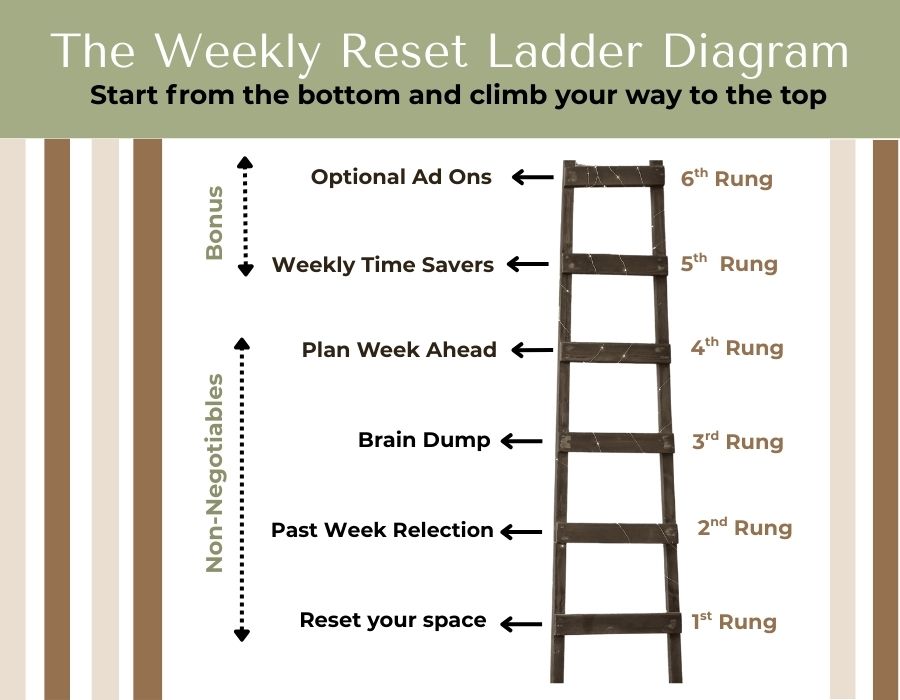
When I think about a weekly reset, I like to visualize it as a ladder.
You don’t jump to the top. You climb one rung at a time, and each rung makes the next one easier.
Think of this weekly reset ladder as a flexible weekly reset checklist you can return to each week.
This is the exact weekly reset routine I personally follow most weeks, adjusting the rungs based on my schedule, energy level, and season of life.
Note: You can change the order or add steps, but these are the core pieces that make a reset effective.
🪜 First Rung: Reset Your Space
- Wipe down surfaces
- Put items back where they belong
- Quick vacuum or sweep
- Light pantry and fridge reset
- Focus on tidying up high-impact areas like the kitchen, living room, and entryway.
Goal: Clearing the visual clutter creates mental clarity and makes everything feel more manageable during your week.
🪜Second Rung: Reflect on the past week
- Write down 3-5 things that went well from the previous week
- Note what didn’t go well and why
- Identify any unfinished tasks or loose ends
- Add unfinished tasks or projects to your calendar for the upcoming week
- Check in on your goals and habits to see how you’re doing.
Goal: Reflection has you move forward without carrying the mental clutter of the previous week.
🪜Third Rung: Brain Dump Everything You Can think of
Now that you have climbed past last week’s loose ends, it’s time to clear everything out of your head so you can feel lighter during the week.
This step is a true brain dump; no organizing, no filtering. Everything goes on the page that comes to mind.
Even the silliest of thoughts.
I like to do my brain dumps in Notion, but all you really need is a piece of paper and a pencil.
Just write everything down. No organizing, no overthinking.
Let it all out! It can actually be pretty fun and therapeutic.
This can include things like:
- Appointments you never put on your calendar
- Home projects you want to get done
- Creative tasks or ideas you don’t want to forget
- Kids activities or events you need to schedule
- Things you need to purchase
- Items you are running low on
- Anything you forgot previosuly
Goal: Get everything out of your head and onto paper so nothing is weighing on you during the week.
🪜Fourth Rung: Plan Your Week Using Your Calendar or Planner
Now that everything is out of your head and onto paper, it’s time to decide when things will actually happen.
This is about getting a clear picture of the week ahead so nothing sneaks up or anything slips your mind.
Start by reviewing your calendar:
- Appointments and commitments already scheduled
- Work tasks such as events, project deadlines, or meetings
- Personal plans, events, or obligations
- Any preparation needed to be completed before work or personal events.
Next, reference your brain dump and ask yourself:
- What deserves time on my calendar and needs to be scheduled?
- What is a must-do for this week?
- What can wait until another week or month?
Now add anything immediate to your calendar for the upcoming week.
For tasks you’d like to do in the future, decide when they realistically fit—or intentionally leave them unscheduled for now.
Here are some recommendations for scheduling:
Schedule Self-Care
Make sure to schedule self-care so you can have the energy to complete all your tasks during the week. I wish I did this years ago! Do this and don’t feel guilty about it.
Set repetitive tasks on repeat
These involve tasks like weekly house cleaning or maintenance, healthy habits such as working out, and anything else that repeats. Just set it on autopilot so you don’t have to think about it.
FYI: Google Calendar allows you to create recurring tasks so you don’t have to add them every week (most calendars offer this feature).
Only add what’s realistic and manageable.
If your week feels full, this is your permission to move things out.
Time-block your priorities
Instead of scheduling tasks randomly, group similar tasks together and assign them a specific block of time. This reduces context switching and helps you stay focused.
Schedule buffer time
A constantly packed calendar will burn you out. Leave small gaps between tasks and meetings to account for transitions, delays, or mental breaks.
Theme your Days
Assign certain tasks to certain days (e.g: content on Tuesdays, home cleaning on Thursdays). This creates rhythm and less decision fatigue.
Midweek Check-In
In the middle of the week, check in on how things are going. What needs to be adjusted, shifted, or made easier?
Flexibility is part of a sustainable reset routine.
🪜 Fifth Rung: Do a Few Things that Save You Time Next Week
After you reset your space, cleared your mind, and planned your calendar, now it’s time to climb the final rung of the ladder to the top, where you climb into your next week feeling calm and in control.
This involves choosing 2-4 activities that will make the upcoming week easier.
For me, meal prep is a big one. I like to prep 2–3 meals back-to-back so I’m not scrambling during the week and can free up time (and mental energy) later on.
Other ideas might be:
- Laying out outfits for the first couple of days of the week
- Meal prepping certain meals and snacks
- Refilling household essentials
- Packing school bags, luggage for a trip, or diaper bags.
Goal: Save time and mental energy during the week by doing a few small things ahead of time.
What Else Should I include in My Reset Rountine?

There are many other things you can include in your reset routine. Some weeks your reset routine will not be the same as your previous one due to different priorities or obligations.
You can add anything your heart desires to be ready for the week ahead.
Here are a few other ideas:
Review your finances.
Check upcoming bills, review your budget, and glance at anything you regularly track..
Check your email
Delete, unsubscribe, and clear out emails you no longer need.
Reset your phone
Remove screenshots, delete unwanted photos, close open apps, delete unused apps, and declutter and organize your home screen.
Declutter files or pictures on your computer
Get rid of old files, duplicate pictures, outdated resumes, or anything else creating digital clutter.
Go grocery shopping or do laundry
These tasks are time eaters. If possible, handle them earlier in the week—but include them in your reset routine if that’s the only time you have.
Clean out your car
Even a quick reset can make your entire week feel lighter.
Plan something to look forward to
A coffee date, walk, workout, or quiet night in—future joy counts as prep.
Prep your mornings
Set the coffee timer, prep lunches, or lay out breakfast supplies.
Water your indoor and outdoor plants
If you’re a plant person like me. You might want to water your plants during your reset routine.
Plan out how you’ll support your habits or self-care for the week
If your habits or self-care have been slipping, your weekly reset is a good time to gently reset what’s realistic for this season.
If you want to zoom out and do a full life organization reset eventually, be sure to read my post, How to Be More Organized: Take Control and Change Your Life.
Creating Your Own Weekly Reset Ladder
The reset ladder I mentioned before is the routine I personally follow, and I tend to add additional tasks if I have time.
But your reset ladder needs to be personalized to you and your current season in life.
Below, you’ll find a reset ladder template you can print and use each week. I’ve also included extra rungs so you can add or rotate tasks depending on what you need most during that week.
Ways to Reduce Reset Overwhelm
Outsource When You Can
If it’s within your budget, hiring a cleaning company, even occasionally, can free up hours of time and mental energy. Some services will even handle laundry.
Delegate certain tasks to older children
Giving kids age-appropriate responsibilities not only lightens your load, but it also teaches them independence and ownership.
Match tasks to the days that make sense,
Busy days, do low-energy tasks; high-energy tasks do on not-so-busy days, etc.
Lower the standards for the reset
If your reset feels overwhelming, take the pressure off by doing less. Sometimes “good enough” is exactly enough.
Rotate tasks week to week
You don’t need to reset everything in one week. Pick different focus areas for each week.
Create default systems
Default meals, default routines, default reset steps—fewer decisions mean less overwhelm.
Give yourself a time limit
Set a time limit for when your reset is done. If you haven’t completed everything, it’s okay. Let it go, and the reset is done.
Do a mini reset if you don’t have time for your full reset
There will be times when we don’t have time for the full reset; that’s where a mini reset comes in to the rescue. Do 3 top-priority things from your reset list for that week.
Conclusion
A weekly reset is truly life-changing. I can’t believe I went so long without doing one consistently. A weekly reset routine has brought so much peace and organization into my life because I not only know my work schedule, but I also know when I’m making time for self-care.
By using a weekly reset ladder or weekly reset checklist, you’re creating a simple system that clears mental clutter, resets your home, and helps you plan your time intentionally. Whether you prefer a Sunday reset or another day that fits your schedule, the most important part is consistency over perfection.
Remember that your weekly reset doesn’t have to look the same each week. Some weeks it will be a full reset, and other weeks it might be a mini reset focused on the essentials for that week. Both are still a reset, and both count.
Download your weekly reset checklist and reset ladder template below to create a reset routine that works for you.