How to Organize a Fridge So It Actually Stays Organized
In this post, you’ll learn how to organize a fridge, how to prep your fridge for organization, and simple refrigerator safety tips.
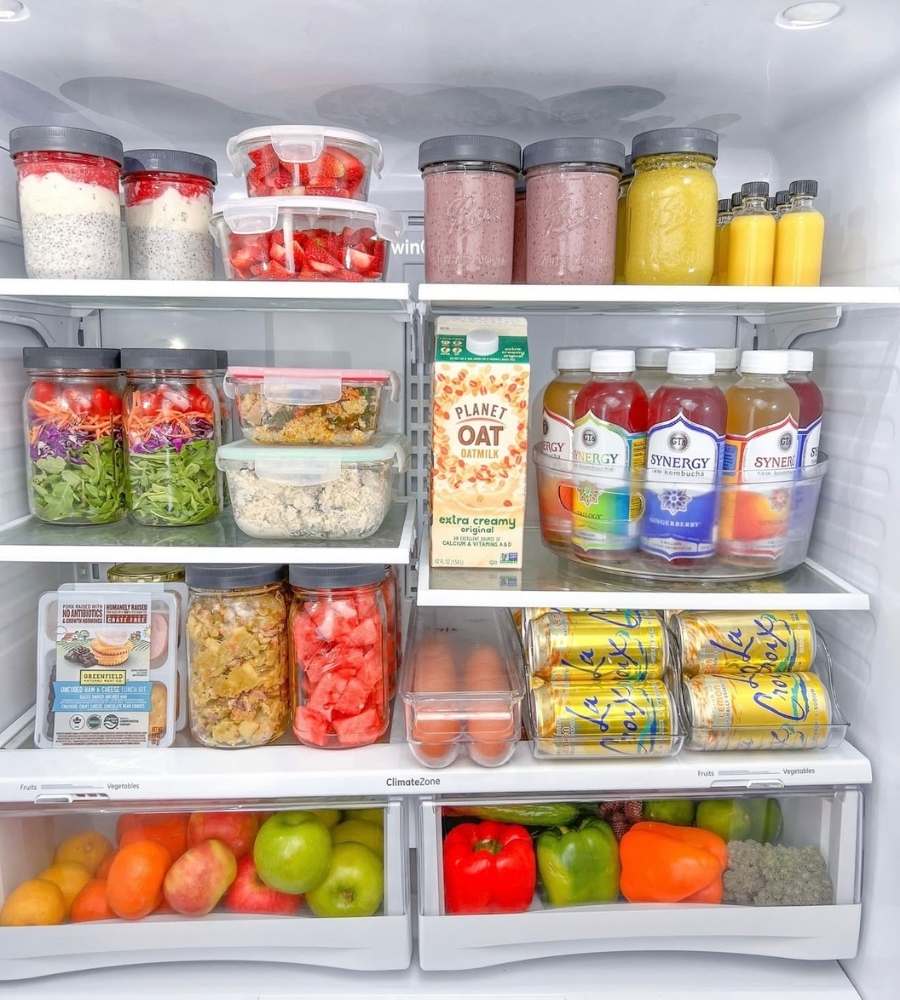
Fridges are one of those spaces that tend to get messy fast, no matter how many times you organize them. Between overpacked shelves, meal prep containers, other family members, kids, and roommates, it can feel impossible to keep everything in order.
Food tends to get lost and never eaten in a disorganized fridge. Let’s be honest, how many times have you cleaned out our fridge and found rotten vegetables or smelly leftovers? I know I’ve been there. We usually blame lack of time for a messy fridge, but the real cost shows up as wasted food and wasted money.
The goal is a fridge setup that actually holds up during real life, not just the first few days. In this post, I’ll share realistic fridge organization ideas, show you how to organize fridge shelves by zones, and explain how using a weekly food plan can help limit excess and reduce waste.
What Is Realistic Fridge Organization?
Realistic fridge organization involves tailoring your fridge setup to your lifestyle, habits, and weekly routines. When the fridge works the way you actually use it, staying organized becomes much easier. If you’re also working on improving the rest of your kitchen, you may find these kitchen cabinet organization ideas helpful.
For the longest time, I didn’t have a fridge organization system that worked for me. My refrigerator would look perfectly organized at the beginning of the week, then be in complete chaos by the end of it.
After dealing with constant frustration and wasted food, I knew something had to change. I eventually realized that realistic fridge organization isn’t about making your fridge look perfect. It’s about creating a simple system that matches how you shop, cook, and eat during the week.
Once these steps are done, you’ll have a much clearer idea of how to organize your fridge in a way that actually works for your household.
Steps to Take Before Organizing Your Fridge
Before organizing your fridge, it’s important to take a few simple steps so you’re starting with a clean slate. Trying to organize around food that is already in the fridge can quickly become frustrating. Fridges also tend to collect spills from drinks, sauces, and food, so giving everything a quick clean first makes the whole process much easier.
Step 1: Remove all food from your fridge
Take out every single item from your fridge and put it on your kitchen counter or table. This helps you see everything you have.
Step 2: Wipe down shelves and drawers
Wipe down shelves and drawers. If your refrigerator needs more than a quick wipe-down, follow my step-by-step guide on how to deep clean a refrigerator before you start organizing everything.
Step 3: Throw out expired or unused food
Check vegetables, fruits, and meat to see if they are rotted or spoiled. Look at condiment expiration dates, old drinks, and throw anything out that is expired.
💡Quick Tip
Check condiments first—they’re typically the most expired items.
Step 4: Take Stock of What You Buy
Look at the types of food you buy each week. Are you actually using everything, or is certain food always going to waste? You may start to notice patterns and realize you don’t need to buy certain items next time.
Step 5: Group Food Items by Categories
Group food into categories such as gallon drinks, canned drinks, dairy, vegetables, fruits, cheese, and meats. This gives you a general idea of how your fridge should be organized.
Step 6: Decide What Needs a Prime Spot
Make sure frequently used items are placed at eye level where you can easily access them. Backup items can be stored on lower shelves.
Step 7: Plan for Real Life
Your fridge needs space for leftovers, grocery overload weeks, and quick cleanups. Leave one open shelf or bin for “random” items so clutter doesn’t spread.
My Rule for Using Fridge Organizers Without Overdoing It
I personally love organizers for any space, especially the fridge. Fridge organizers keep everything in its place, make items easier to find, and are usually pretty affordable.
But you don’t have to overdo it and fill up your entire fridge with organizers. My rule is simple. If an organizer helps me save space in my fridge and keeps items in their designated place, then it’s worth it for me.
For example, I buy 30 eggs at a time, and I really dislike how bulky the carton is. It takes up too much space and makes the fridge feel crowded. That’s one area where an organizer actually makes a big difference.
In general, I try to use organizers only when they solve a real problem. A few well-placed organizers can actually make a big difference.
MY favorite fridge organizers THAT ACTUALLY HELP
- Clear Pull-Out Drawer Bins: Make it easy to group similar foods together while still seeing everything inside at the same time. They are great for storing fruit, especially smaller fruits like strawberries and blueberries, as well as vegetables. These are especially helpful if your fridge doesn’t have dedicated fruit and vegetable drawers.
- Egg holder: I find eggs annoying to store in the fridge, especially if you buy them in bulk. An egg organizer can save a surprising amount of space and makes it easier to see how many you have left. I’ve used both a vertical egg holder and a flat egg drawer, and both free up much more room than keeping them in the original carton.
- Soda & Seltzer Can Organizers: These are great for stacking drink cans so they don’t roll around the fridge or take up an entire shelf. They keep everything contained and make it easier to see what you have.
- Acrylic Lazy Susan: An acrylic lazy Susan is perfect for condiments, sauces, glass drinks, and small jars that tend to get pushed to the back of the fridge. Being able to spin it makes everything easy to reach without having to move other items around.
- Drawer Organizer Trays: For fridges with smaller drawers, acrylic organizer trays can help group foods by type so the drawers don’t become messy as quickly. They’re especially helpful for things like string cheese, deli meat, or snack packs that tend to slide around.
- Fridge Snack Bins: A simple snack bin makes it easy for both kids and adults to grab what they need without digging through the fridge. It also helps keep smaller snack items grouped together so they don’t get lost on the shelves.
- Magnetic Fridge Grocery List: A magnetic grocery list sticks right to your fridge so you can quickly write down items as you run out of them. This helps prevent buying duplicates and makes weekly grocery shopping easier.
- Magnetic Spice Rack: A magnetic spice rack is great for storing go-to spices you use often, along with small jars, sauces, or other frequently used condiments. If you’re working on organizing your spices beyond the fridge, these kitchen spice organization ideas can also help.
How to Organize a Fridge: 4 Strategies That Work
When it comes to fridge organization, I like to use four simple strategies together. These approaches help keep food visible, reduce clutter, and make it easier to keep your fridge organized long term instead of constantly rearranging things.
The four organization strategies I use are:
- Organize fridge shelves and drawers by temperature
- Organizing Your Fridge Around Weekly Meals
- Organize Your Fridge by Food Categories
- Organize Your Fridge Based on Daily Use
1. Organize Fridge Shelves and Drawers by Temperature
Fridges come in all different shapes and sizes, and not everyone’s fridge is the same. However, most refrigerators have temperature differences that range from top to bottom. Because of this, it’s best to store certain foods on specific shelves to keep them fresher longer.
Top Shelves
The top shelf of the refrigerator usually has the most consistent temperature, which makes it a great spot for foods or drinks that are already prepared and ready to grab.
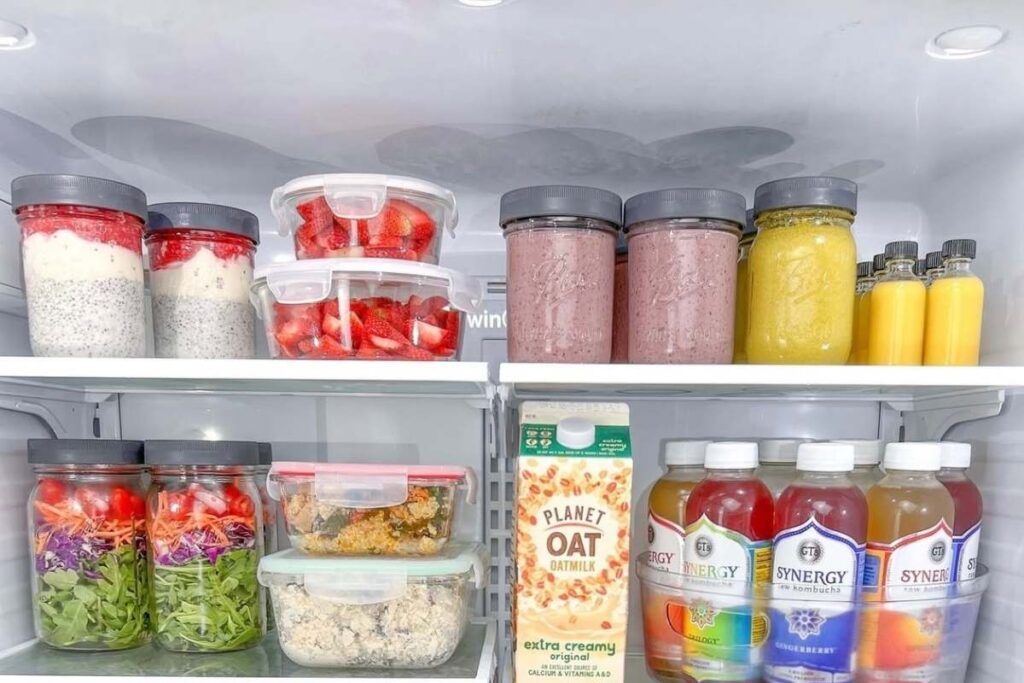
Best items to store here:
- Drinks (milk, juice, iced tea, soda, milk, and other drinks you enjoy)
- Meal-prepped foods.
- Leftovers from dinner out or dinner in
- Eggs
- Creamers
Tip: I also store some of my meal prep items on this shelf simply because there’s more space here. If something isn’t working in your fridge, don’t be afraid to switch things up until it feels right.
Bottom SHELVES
The bottom shelf is the coldest part of the fridge and is great for raw proteins or other raw foods.
The best items to store here include:
- Raw Meat
- Poultry
- Seafood
Pro Tip
Keep raw meat on a tray or in a leakproof container to prevent drips and cross-contamination.
Fruits & Vegetables Drawers
Crisper drawers are designed to control humidity, which helps produce last longer. If you don’t have crisper drawers, you can buy clear bins to store your fruits and vegetables in.
- High Humidity Drawer: Leafy greens, herbs, broccoli, carrots
- Low Humidity Drawer: Apples, berries, oranges, peppers, and other fruits.
Tip: If your produce tends to spoil quickly, adjust the setting and separate fruits from vegetables. Also remove produce from plastic grocery bags, as it improves air flow.
Pull out deli or snack drawer (If You Have One)
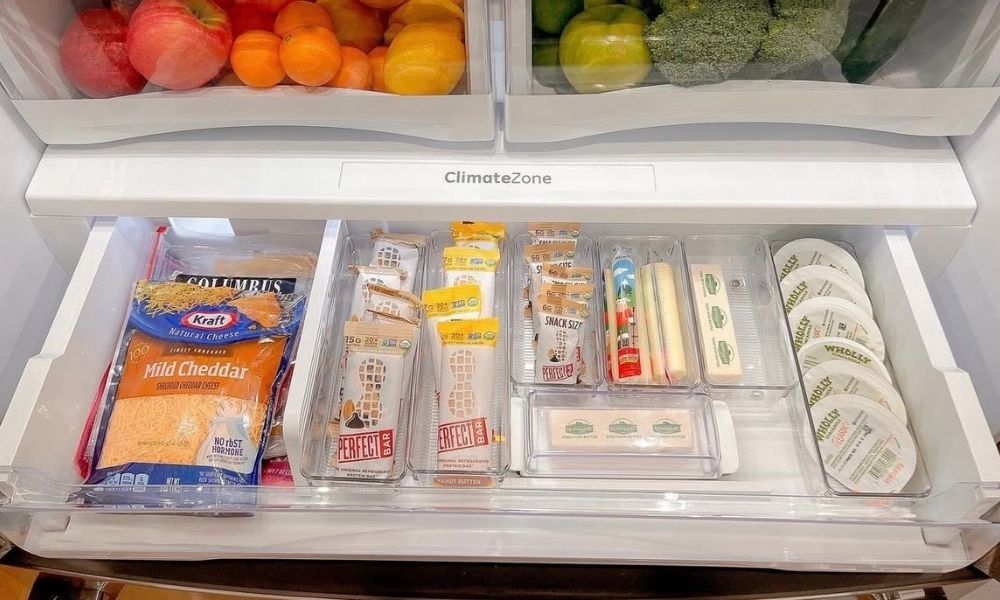
This drawer is a great addition to refrigerators, and it’s great for quick access foods. This drawer is especially helpful for kids or quick meals because everything is easy to see and reach for without digging through shelves.
The best items to store here include:
- Deli meats
- Cheeses
- Snacks
- Lunch items
Door Shelves
The fridge doors experience the most temperature changes because they are the first area to hit the air when you open the door. It’s best practice to store items that have long shelf lives in this area. Avoid storing highly perishable items like eggs, milk, and yogurt in this area.
The best items to store here include:
- Sauces
- Condiments
- Juice
- Salad Dressings
Want to organize the rest of your kitchen too? Download my free Kitchen Organization Chart to see how to divide your kitchen into 8 functional zones and create a designated place for everything.
2. Organizing Your Fridge Around Weekly Meals
I used to be the type of person who went to the grocery store without a plan. I’d decide what to buy as I walked the aisles, which almost always led to over-purchasing and wasted food by the end of the week.
That changed once I started organizing my fridge around weekly meals instead of just buying what I thought I needed. Having a plan in place helps me buy with purpose, store food more intentionally, and actually use what I bring home.
1. Create a weekly meal plan
Think about what you’re making for breakfast, lunch, snacks, and dessert if that’s your thing. Having a rough idea of meals makes grocery shopping much easier.
2. Create a food shopping list by category
Group items like produce, dairy, proteins, and snacks so shopping (and unpacking) is easier. This makes shopping faster and also helps when unloading groceries at home.
3. Stick to your list
This is the hardest part, but it helps cut down on impulse buys and wasted food.
4. Pack groceries by category if you can
If possible, place similar items together in your grocery bags. This makes unloading and organizing your fridge much faster when you get home.
5. Store food in the fridge by category
When similar foods are grouped together, it’s much easier to see what you have and actually use it before it goes bad.
6. Keep first-meal ingredients front and center
Place ingredients for the first few meals of the week where they’re easy to see and grab. This makes it much easier to get started cooking instead of reaching for takeout.
7. Try to avoid takeout when possible
Takeout is tempting and easy, but it often leads to wasted food and a fridge full of ingredients that never get used.
Pro Tip
Meal prepping on the weekend is a total game changer for the week ahead. It keeps your fridge organized, and you don’t have to prep every meal for the first half of the week. This will help you actually use the food you buy. Having a few quick, go-to meal ideas also makes busy days feel way less stressful.
3. Organize Your Fridge by Food Categories
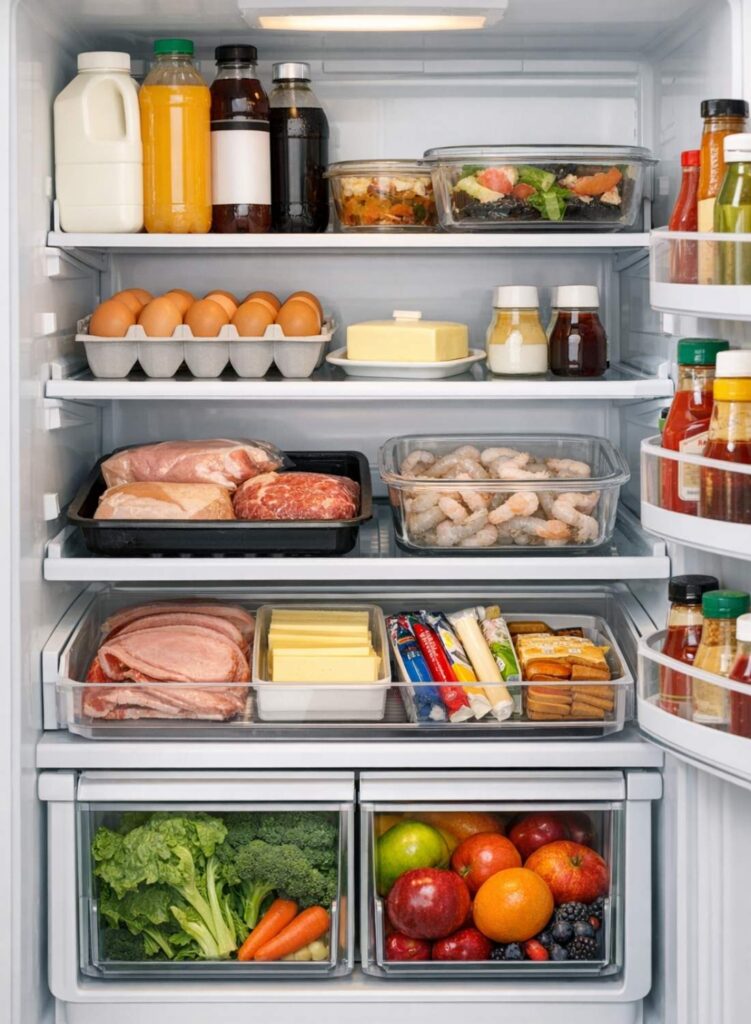
Another simple way to organize your fridge is by grouping similar foods together. This makes it much easier to see what you have and prevents items from getting lost in the back of the refrigerator.
For example:
• Dairy in one section
• Drinks together on one shelf
• Fruits and vegetables in their drawers
• Deli meats and cheese in one area
• Snacks grouped together
When similar foods are kept together, it becomes much easier to grab what you need and keep the fridge tidy throughout the week.
You can also apply this same category system to your pantry. When pantry foods and fridge items are organized similarly, it makes meal prep and grocery unpacking much easier. If you want more ideas, check out my Pantry Categories Guide and 30 Pantry Organization Ideas for simple ways to organize your pantry so it works seamlessly with your fridge.
4. Organize Your Fridge Based on Daily Use
Another realistic way to organize your fridge is based on how often you use certain foods.
Frequently used items should be placed at eye level or the front of shelves, while items you use less often can be stored lower or toward the back.
For example:
• Everyday drinks at eye level
• Kids snacks within easy reach
• Condiments in the door
• Back up groceries on lower shelves
This method works well because it makes the foods you use most quick and easy to grab, which helps maintain organization.
Fridge Organization Safety and FAQs
Final Thoughts on Fridge Organization
Getting your fridge organization system in place can be incredibly satisfying and rewarding. When everything has a place, you know exactly what you have in your fridge, which helps prevent food waste and makes the kitchen feel much less chaotic.
Using the right organizers for the foods and drinks you keep most often can also make a big difference without overdoing it. A few simple bins or containers can help keep everything visible and easy to grab.
When organizing your fridge, I find it helpful to use four strategies at the same time: organizing shelves and drawers by temperature, organizing around weekly meals, grouping foods by category, and arranging items based on daily use.
If you’re continuing to organize your kitchen, you might also enjoy these kitchen organization ideas for a more functional space. With a little planning and a few simple systems, you can create the organized fridge of your dreams and keep it that way long term.
If you enjoyed this guide on fridge organization, you might also like these helpful organization tips:
- How to Deep Clean a Refrigerator and Maintain It Long Term
- How to Store Kitchen Items in Cabinets and Drawers Efficiently by Zones
- 28 Aesthetic Kitchen Organization Ideas for a Stylish Home
- How to Store Kitchen Items in Cabinets and Drawers Efficiently by Zones
- Improve Your Kitchen with a Free Kitchen Zones Organization Chart
- How to Declutter and Organize Your Pantry Using Pantry Categories
- 30 Brilliant Kitchen Pantry Organizing Ideas for Every Home
- 30 Inspiring Kitchen Spice Organization Ideas You’ll Love